Thursday, 12 May 2016

INDIE INTERVIEWS : LIAM REGAN - DIRECTOR OF BANJO


Liam Regan is a UK born filmmaker who has recently made waves in the indie community with his low budget debut feature Banjo based on his short film Confessions of Peltzer. Since premiering last year the film has played all over globe and solidified Mr Regan's status as a up and coming filmmaker to watch. 

Inspired by filmmaking legends such as Lloyd Kaufman (Who makes an appearance in Banjo) and Frank Henenlotter, Liam Regan wears his love of genre movies on his sleeve with a style and approach that is reminiscent of the golden age of splatter cinema.

Micro Budget Massacre recently caught up with Liam about his experience making Banjo and what comes next.


Every journey starts with an origin story, How did you know you wanted to make films?
Ever since I can remember, I've always been enamoured with horror movies, some of my favourite childhood memories was when my Mum took me to my local video rental store and I would instantly be overcome with goosebumps and have a outer body experience (became dizzy) whilst browsing through the video boxes with gnarly artwork. A few of the memorable films I rented were the likes of 'Cat's Eye', 'Critters 2: The Main Course' and 'Ghoulies Go to College'. 

I quickly became a fan of creature feature flicks and with the addition of Sky Television in our household (in the early 90's) my love for the genre grew further as channels such as Sky Movies Plus and 'Bravo' showcased such milestone films in my life like 'Child's Play 2', 'Puppet Master 3: Toulon's Revenge' and 'Basket Case 2'. 
However it wasn't until the Summer of 1996, when one of my weekly trips to Blockbuster Video resulted in a purchase (My Mum purchasing that is, I was only 11 years old at the time) an ex-rental video tape of 'The Toxic Avenger Part 2', a movie that showcase a dark mixture of horror and comedy, fused with exploitation and ultra violence, I had never seen anything quite like it before, and then when opening my Sky TV guide magazine back in September of 1996, I noticed that the channel Bravo was having a Troma season in October, and this eventually introduced and exposed me to their back-catalog of films. 

Titles such as 'Surf Nazis Must Die' and 'Rabid Grannies' made me excited for every Saturday evening to roll around, with my eyes firmly glued to the TV at 10pm in excitement. So thank you to Troma Entertainment, they corrupted my fragile little mind, to want to be a filmmaker with self masochistic tendencies. 

With more and more people choosing to just go out and shoot their own movies now, what made you take the DIY approach to making your first film?
I realised that nobody was going to give me money to make the kind of movie, that deep down in my heart, I wanted to make. Plus, I'm a nobody (still am) - Prior to Banjo, I had no track record, other than a shitty 13 minute short film titled 'Confessions of Peltzer' and numerous IMDb credits as a production assistant on independent genre movies I've worked on over the years, and why should they give me money? This is a business at the end of the day, and investors at least want to see a return, and I'm wanting to make a movie about a guy who snaps his penis (based on a true story) and summons his imaginary friend, which in turn, manipulates him to shoot up his office. 

Banjo isn't a possession movie, or a zombie movie by the numbers, so it's a gamble - and it was a gamble for yours truly also. Plus, I didn't want to compromise my vision, I wanted this to be purely my movie, with my name on it, I have always viewed filmmaking as immortality in a way, leaving art behind for generations upon generations to discover (now I have panic attacks about all physical media being destroyed and digital rights being lost in the apocalyptic wasteland, long after I die. Paranoia is a bitch!),

As we all now DIY filmmaking can be tough, what were some of the downside of going out on your own?
It's a very long, lonely and self masochistic process. You write the movie on your own, then you have like a hundred people help you during the actual film shoot, and then you're on your own yet again. It can be depressing, self deprecating, yet it's the best kind of film school I have ever experienced. You make a million mistakes, and ruin and tarnish relationships and friendships, but through the blood, sweat, semen and tears, you create your film-baby. 

On the flip side, what were the upsides?
Creative freedom and expression, I had producers, actors, you name it drop out during pre-production, due to the extremities and content of the initial drafts of the screenplay. However I felt like I managed to strike the right balance, and I was able to hire the people I wanted to work with and move forward with the project, and held the vision I always had for 'Banjo'. I remember the first draft of the screenplay having at least 12 rape scenes, I remember being heavily influenced by hardcore exploitation horror movies during that period. I cut that down to 1 rape scene, which people never mention in reviews or interviews. 'Banjo' is essentially a rape-revenge movie, but has never been branded by that genre, which has puzzled me. 

So after that hard work, your filmmaking journey is far from over, what happens when the film is done?
The film is finished and everyone thinks you're rich and a millionaire, when in reality, you're broke as you have ever been in your life, and are clutching at favours, and you'll meet a dozen people wanting to take advantage of your current desperate situation. People you would class as friends will inevitably end up on your shit list by the time the year is through. You'll make another million mistakes on trying to find a sales agent/distributor for your project, and then you'll waste a shit load of money on film festivals that don't even consider your movie, even though you have paid them an extortionate fee to at least watch the movie. I think the best way I could put it is: "Life is not a movie. Good guys lose, everybody lies, and love... does not conquer all."  

Every film is an experience and more importantly a lesson, what did you learn that you'll take with you to your next movie?

Don't write too much dialogue, create more action sequences and make a much more fucked up movie. Lloyd Kaufman (President of Troma Entertainment) is my favourite shit disturber, he dealt with "taboos" and subject matters that the Hollywood system were too afraid to conquer back in the 70's and 80's, and I'm wanting to carry on that tradition. The key is to make a movie that nobody forgets, sure they can love it, or hate it, but they'll never forget it, that's the dream. I absolutely love making films, it's what I was put on the earth for, and I don't care if I need to max out more credits cards, or take out more loans or work as many legally available hours I can at my day-job, nothing will stop me from creating, it's the best therapy out there. I want to entertain people, I consider that as one of the major importance in life, other than finding the cure to cancer. 

And finally, what is next?
I'm currently writing a rape revenge/black comedy titled 'Parents Evening' which if you put the following movies: 'Heathers', 'Jawbreaker', 'Detention', 'Class of 1984' and 'I Spit On Your Grave' in a blender, you would have the 'Parents Evening' protein shake ... full of bodily fluids. I hope to shoot that in 2018, and if anyone wants to give me money for 'Banjo 2: Make Room for Daddy' I would be more than happy to bring those characters back, but it all depends on the success of the home video/on demand release of 'Banjo' which is due out on Amazon and iTunes by late 2016. 
For more information, feel free to add me on Facebook at http://www.facebook.com/refuseliam or follow me on Twitter @refuseliam

For more information on 'Banjo' please like the page at http://www.facebook.com/banjofilm or follow us on Twitter @banjomovie

IF YOU FIND THIS BLOG USEFUL. PLEASE SHARE. You can keep up to date with our filming goings on at our FACEBOOK PAGE :)

ADVERTISMENT

Tuesday, 10 May 2016

FINDING LOCATIONS : 3 Easy Ways to Find Your Next Film Set


As we've talked about before, finding the right location can make or break your movie. Shooting your film in the right place adds so much production in terms of style, look and value that to over look it is setting yourself off on the wrong foot.

In big budget movies, it not uncommon for sets to be built on a sound stage wherever possible, this is usually due to the amount of control the creative team needs over the set, i.e being able to remove walls, lighting, shooting around the clock. If you're shooting on a budget its unlikely (although not impossible) that you can build your 'Church Interior' or 'Canadian wilderness' from scratch as a set on a sound stage. This usually means that you have to find something the preexists in the world.

This is both a blessing and a curse. Finding a pre-existing location means that you have less control over things like weather, power, access, angles, food establishments and the list varies drastically from place to place, meaning a lot of prep and compromise most of the time. The upside however, is that you get something real, something that you can't build, something raw and lived in and that is really what adds the value to your films.

FINDING YOUR LOCATION

Following are 3 ways of sourcing locations when you are working on a limited budget, These 'suggestions' are by no means the best , or the only, ways of finding the right location for your film, but hopefully they'll help you think creatively about what you need and help you look at where you shoot in more productive way.

1. UNIQUE CIRCUMSTANCES

Douglas Prison : Isle of Man
Finding locations can be tough going. Especially if you need anything outside of student flat or family home, things start getting difficult pretty quickly. This is when you need to employ some of your unique circumstances to finding what you need. By 'Unique Circumstances' I mean this, Everyone has access to something unique that no body else has access to, in terms of locations.

This is basically looking at what you have access to personally. Can you make a film out that creepy looking shack your dad built at the bottom on the garden? Does your Aunt work at a High School after hours? Does your mate have the keys to the warehouse on a weekend? All these are great starting points to finding a great location to shoot in that isn't 'Mark's Studio Apartment' and also a brilliant way of getting the creative juices flowing. There a few things than coming up with a  scene or even an entire film based around an amazing location. 

I always 'try' to write locations based on something I know we have or can get access too, even if that means taking a pause from writing for a moment and throwing it out there to people I know with a "Does anyone have access to..." and usually I receive a "No, But I have access to...", sometimes this will dictate where the film is set and sometimes the direction a film will go.  You have to be creative and compromise when it comes to low budget filmmaking. 

Slasher House (2012) Douglas Prison : Isle of Man 

For Example, I originally wrote Slasher House to take place in an old run down mansion, when we were offered an abandoned prison, it was too good to pass up and we adapted and it worked out for the better, both visually and thematically. It also meant we had to adapt one scene to be set in a 'Gallows' which was a pretty awesome, if not terrifying, experience and also added another dimension to the film.

ADVERTISMENT
2. YOUR NETWORK

After you've spent your first couple of movies exhausting and exhausted your family and friends locations, you should have begun to develop a 'network' of people to work with, to show your work to and who also make movies. This is your community and these are the people you can turn to for help. 

Other filmmakers are a great conduit for resources, this is because, just like you, they spend their time making movies and, believe or not, have come up against most the same problems you have when it comes to getting locations and come out the other side. Its a great way to to find creative solutions to problems, by talking to people who have already solved those problems and getting their advice.

The biggest advantage of this, is that it gives you a new perspective and helps you think outside the box. One of the biggest mistakes I see people making in terms of locations is that they need something so they look for "INSERT LOCATION HERE" and that alone, when one of the key ways to solve the problem is finding something that can do the same job, but provides earlier access. Other filmmakers will have been through this and will be able to help advise you and what can substitute your needed set. 

Legacy of Thorn (2014) : High School Oldham : Main Building
Legacy of Thorn (2014) : High School Oldham : DT BLOCK
What I mean is, for example, on Legacy of Thorn we needed a hospital, but getting one that looked operational was tougher than we could have imagined. Instead we found a section of our old college that looked very similar to a hospital corridor (along with first aid room) and dressed it up to stand in for it. Throwing in some posters, a couple of extras in long white coats and nurses uniforms and we had a what we wanted but without the red tape of shooting a real hospital. 

Sometimes its worth talking to other filmmakers about how they made it appear that they shot in a location.

3.  JUST ASK

Possibly the simplest approach to finding the right location is to find the location you are after and just ask. It seems like there might be more to it, but its really as easy as that. Sometimes if we need a specific location we just find the place we want and then ask. Sometimes we're successful and sometimes not, but no one has ever done anything worse than say 'No'. Usually people just want you to cover electric or a small charge to use it, sometimes they might even just let you have it for free as long as it doesn't conflict with business hours etc.

The real issue with this approach is that it can become a numbers game and thats a lot of ground work, but if you're willing to put that work in, you'll almost certainly find the location that you're after. Just find the type of location you're looking for and make a list of suitable candidates, from here your kind of politely cold calling and explaining your project and what you want to do. Some people won't care, some will be interested, but won't be able to help you and you'll come across those who will do whatever they can to accommodate what you're doing. Its pretty much that simple.

Slasher House 2 (2016) Warehouse 
Slasher House 2 (2016) : Warehouse
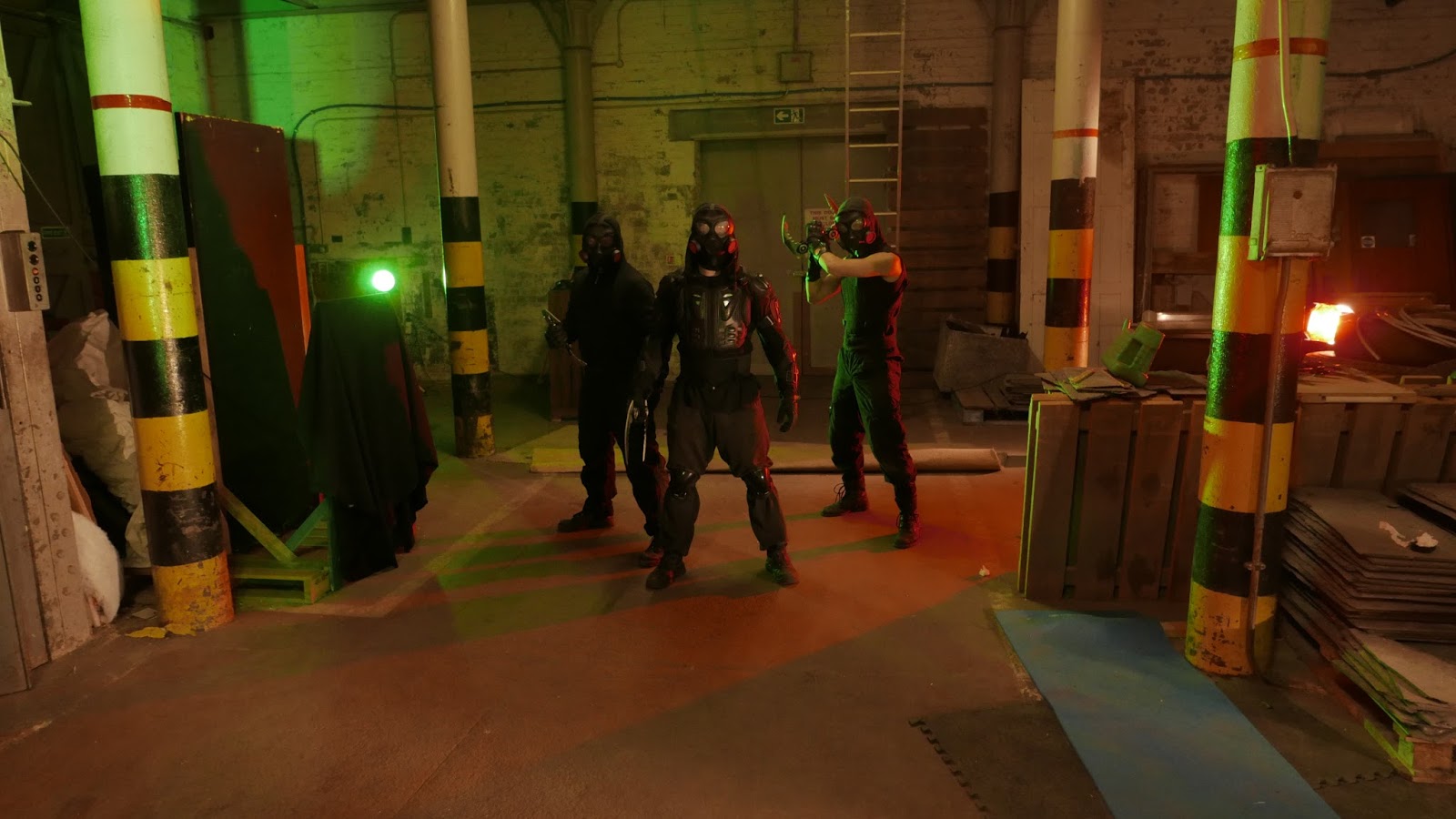
For Slasher House 2, we needed a government facility (or something that could pass for one). We actually live in the town that has the government facility that solved the Enigma Code (now a tourist attraction), but they were a flat out 'NO' out of the gate. We decided that we would have to found something that could work instead of and figured a 'Lazer Quest' could work. We emailed every Lazer Quest in a 100 miles radius and out of 25 we got a response from 2, we met with one. It didn't work out due to the times we needed, but we had the location should we want it. 

We eventually went in a different direction that worked out better for us, but I'll talk about that in a future blog. 


___________________________________________________________________

I should point out, that its important to be honest and up front here, telling them you're shooting a family drama when really you're shooting a gore soaked torture porn is counter productive when you turn up on the day and start spraying the place down with food colouring and syrup and if they think they've been fooled, chances of them signing a release form are slim and even if they do and then find out they've been lied to they'll just flat out refuse the next filmmaker that come knocking and its your job to make sure that we pave the way for everybody in the community.

Just like any aspect of filmmaking, employing creative thinking is your friend and if you think about what you need in front of the camera creatively you might even surprise yourself in what you come up with what you think of outside the box or sometimes its as simple as just asking. 

MJ

IF YOU FIND THIS BLOG USEFUL. PLEASE SHARE. You can keep up to date with our filming goings on at our FACEBOOK PAGE :)

 Get Legacy of Thorn on DVD and Digital HD now.
ADVERTISMENT


Thursday, 5 May 2016

INDIE INTERVIEWS : FILMMAKER JASON IMPEY

Jason Impey has had quite a prolific career as a filmmaker. The UK based filmmaker with titles like 'Tortured', 'Home Made' and 'Fluid Boy' under his belt has almost 100 director credits to his name on IMDB and wears his love of exploitation cinema on his sleeve. 

MicroBudget Massacre talked to Jason about his approach to DIY filmmaking and the pit falls of taking on the daunting task of making feature length movies with very little money. 


Every journey starts with an origin story, How did you know you wanted to make films?

My story starts way back when I was just 5 years old and loved sitting at home watching good old VHS’s and TV. I was a bit crafty and watched a few horror videos at a young age I sneakily got my hands on and have been hooked ever since. I really enjoyed viewing all this stuff - but it went further in my head. I was interested in how and why a film was made, why shoot it that way, why use those shots, and was very intrigued as to how it was all put together and ended up being in my hands on this tape. 

This lead to only one thing, I armed myself with my fathers family home movie camera and went out shooting amateur shorts at the age of 10 getting my dad to edit them together on the VCR. Eventually this hobby led me to college to study media and filmmaking and I have never looked back since. It makes me happy, is a way of life and I honestly could not imagine doing anything else! 


With more and more people choosing to just go out and shoot their own movies now, what made you take the DIY approach to making movies?

As I was so young and inexperienced when I started making films it was the only real way to go about it, but I am so glad I did as I learned so much by just going out and giving it a go, and if anything it just fuelled my curiosity in to the world of film and allowed me to discover a real passion I have. I grew a better appreciation of independent filmmaking and discovered I actually really like raw DIY movies and it pleases me to contribute to this society.


As we all now DIY filmmaking can be tough, what were some of the downside of going out on your own?

Finance is always going to be a downside for me unfortunately. Its sad but true that DIY filmmaking can cost a fair bit of your money and extremely hard to make money from, but don’t get me wrong, it can be very rewarding and in some ways wouldn’t change it for the world, but living as a full time freelance indie filmmaker I’ve had the odd tight month and a few scary weeks here and there not knowing where the hell my next pay cheque is coming from.


Another sort of downside I would say is restrictions on your production. Its not always possible to get on camera what you hope for if your doing it all yourself, however there is an up side to this as it makes you think outside the box and can sometimes make the process more creative, it certainly keeps you on your toes!


Time is one of my biggest enemies. Theres never enough of it to get everything done, mainly on the actual filming days and this leads to a major downside for me - stress! I can get really down and a bit depressed when everything starts falling apart like running out of time, not being able to get a location, not finding enough cast members, when it goes wrong it can go wrong bad and be very upsetting and get right on top of you, however you have to try and remain strong and keep trying as when you do get through it you hopefully have a movie there that you can take some pride in and be proud that you made it.

On the flip side, what were the upsides?

Through making films in a DIY manner I’ve met some great people that share the same passion and interests as I have and become good friends. I have had fun times, and being on a indie film set is really one of my main ways of socialising. A real upside is when everything is complete and you realised you actually made a film, that is your special piece of art that will last and can be seen again & again, it feels like a real achievement when you get through it and you have something to show for it, and at the end of the day I’m doing something I love doing so I can’t really complain that much!


You've Produced and Directed nearly 100 films now including shorts over the last 20 years, what is your process for making so much stuff so quickly?

My main way of achieving such a prolific track record of films was just literally go out and make stuff. I managed to get a few good people together and had a bit of equipment as I freelance in the world of film anyway which allowed me to have access to the odd thing I needed, so luckily I was able to phone up who I thought I needed, grab my camera and go out guerrilla style and just shoot stuff. 

I would even sometimes just map the rough idea out back in the day and ad-lib the film and just shoot the coverage I thought I needed to tell the story in a location that was quiet that I thought we would not get bothered at! A bit naughty I know but did the trick, and some of my best work was made this way! As I did most of the jobs on the production myself I really only needed a simple idea I could play with, a few people in front of camera and a place to shoot, once that was sorted the rest was just fun playing about and being creative.


Apart from 'Just make movies' what advice would you give people starting out making their own films?

I would say if you want to make a film don’t run before you can walk. Start with a short, find your own style and way you like to work. Experiment and play about a bit before you get too stuck in and choose who you work with very wisely, it only takes one bad seed to ruin a production.

And finally, what is next for Jason Impey?

Well, I am a lot slower at making films than I used to be. I have become a lot more fanatical how I like stuff over the years and become more OCD with everything. I also take on a lot more freelancing work to get by as a filmmaker, but there are new productions on the way, including shorts and a feature in which I am returning to my roots - the horror genre!

You can check out more of Jason's work at his official site : http://jasonimpey.co.uk

______________________________________________________________________
 
ADVERTISMENT

Monday, 18 April 2016

AUDIO APRIL : Low Budget Recorders


Now before we get started let me just say, when it comes recording sound on set, there is absolutely NO SUBSTITUTE FOR A REALLY GREAT PROFESSIONAL SOUND GUY!!.
Someone who really knows what they are doing and can capture professional quality sound is indispensable and if you can afford a professional sound guy then thats exactly, without a doubt, what you should do.

However, if you're making a film on buttons and glue, the chances are you can't afford to hire a really great sound person and so the temptation is is to get your mate 'bob' to do it because he kind of, sort of knows his shit about music or something. This is a big mistake. 

Filmmakers often overlook sound on their films and they really shouldn't, good sound is probably more important than a great picture, as you probably heard a billion times before, but its very true. 


As I discussed last week, I shoot a lot of heavy action stuff, as a result, myself, my camera and my sound gear are often right in there with the action and fairly often a stray sword or stick or machete or puppet will take out my audio rig. My camera is fairly durable from small knocks, but the right angle can dislodge my audio rig and send it to the floor. I've lost many a microphone this way, which is why last week I discussed the inexpensive Takstar Microphone which cheap enough to replace with ease. 

On my most recent feature I've destroyed two recorders with simple little accidents and so it was important to me that I was able to replace them cheaply and quickly without sacrificing quality, but whilst also keeping my camera rig as light as possible. Here are some of the options I've looked at. I shoot both Visual's and Audio myself so I've taken that into account. 

ZOOM H4N (£250)
The largest and most common of my recommended recorders (there are some newer,
better versions, but I haven't used them so I wouldn't feel comfortable recommending them). This is pretty much the standard for low/no budget indies and its a great recorder. Heavy, durable, lots of control over audio input and of course XLR inputs for higher quality audio and making it compatible with much better mics from the off set with the use of adapters. 

Its well suited to a dedicated sound guy and adding this model to a large rig is fairly common, but for lighter rigs it probably adds too much weight. I've aways used one of these with a separate sound person on set, I did use a Tascam equivalent on my latest film in an emergency after we busted the H2N recorder and it knocked the rig off balance a little too much, meaning someone else had to operate it.

If you can shell out a couple of hundred quid for a recorder no bother this is probably your best option and it takes standard SD cards (as well as SD-HC) and can also take large (and small with an adapter) jack microphones. There are newer versions and options from Zoom out there, but this is a good solid standard to have on set and works very well if you have a seperate sound guy and give great quality results.


ADVERTISMENT

ZOOM H2N (£150)
A mid range audio recorder, they retail at around £150-£200 and although the body is a plastic build, it feels fairly solid. It comes with a built in mic that be set to various functions and, most importantly for recording for film, it comes with a Mic input (3.5mm jack) and Headphone input. One of its most useful features is that the gain is controlled by a wheel on the side of the unit rather than button (like the Zoom H1) so theres no handling pick up or clicking if you're having to adjust the input whilst shooting. 

The Zoon H2N takes standard SD cards that load into the bottom where the mount is also situated. This becomes a pain when trying to change cards as the whole thing has to be taken off your rig in order to get to the card or battery hatch. To get around this, I opted to use a larger card so that change overs became less frequent. It is also very bulky, not as much as the larger recorder like the H4N, but the actual shell of the recorder itself is curved and so its tough to mount it to anything aside from the supplied tripod mount on the bottom. 

Still the quality from the recorder is great and it really does an amazing job, especially for a recorder than doesn't have an XLR input, I'm always surprised at the great recording quality that I get from the H2N just using my budget £20 video mic. I used this recorder on a dozen features and shorts and I was very happy with the results. Its perfect for those who want something a little less flimsy than the Zoom H1, without the bulk of something larger. 

ZOOM H1(£100)
A smaller, stripped down version of the H2N, the Zoom H1 is a sleek little recorder than has the same features as its big brother the H2N, but packed into a smaller body. This brings with it some advantages, it can be mounted to rigs easier, having flat sides I often create a velcro mount and attach it to my mic rather than having to add and extra bracket to add the recorder. It also has a standard tripod mount of the bottom and its MicroSD input is on the side which is easily accessible as well as only taking one AA battery, rather than 2 like the H2N, which is also easy to get to, most of the time with out having to remove the recorder, in a lot of ways it improves on physical functionality of the H2N.

There are some drawbacks however, the unit is made of cheap plastic and so there quickly becomes an issue with handling noise (even with external mic use) unless you have shock mount. The other major issue is that the quality settings aren't controlled by a menu system like H2N, but rather, by series of physical switches on the back of the recorder, its handy and straight forward, but the mount is right next to them and during my first use I mounted my recorder only to find that my rig would knock the switch changing the quality from WAV back to MP3, so this is something to be conscious of. They overall units are also pretty fragile and break very easily if you're not careful.

Overall though, at the price, the quality of the actual recording is the same as the H2N and the ZOOM H1 features the same 3.5mm Mic and Headphone inputs. The input here is controlled by little buttons on the side which cause some issues with handling noise, when filming so its something to keep in mind, but for £100 (or about £70 used) this a good option for no budgeters and a great back up to have in case your larger recorder fails on you.  

8GB eSYNIC STEEL RECORDER (£9)
After smashing two recorders on set, I looked into some potentially cheaper options. Whilst browsing ebay I came across the eSynic Voice Recorder. It cost me about £9 and I took a chance on it just to have a look. The overall build quality of it is really good, it feels very solid and durable and feels like it could take a few knocks without much trouble. Its also the smallest recorder I've ever owned, its about the size of a 10 pack of cigarettes and its very light and flat, meaning that I can make a velcro mount to attach to my mic easily. In fact its so light it just rests against the shock mount fairly well. 

The recorder comes with an 8GB built in memory and fixed internal battery and connects to a computer via usb to run off the files and charge, meaning that it has no external storage, which can be a good thing in terms of not having to change over cards & batteries, but the downside is that if it runs out of space or charge then its a case of waiting for it, however they are so cheap it would be easy to have two. It is a bit temperamental when it comes to saving files though and the instructions it came with a pretty useless. I did discover via a youtube review that the stop button needs to be pressed twice to save the file rather than the pause button or record button like the zoom recorders. 


The monitoring suggests that the audio is peaking or distorting at times but on playback it turns out fine which is odd. Another baffling thing is that the WAV files it records can't play back from the preview (for mac at least), they need to be converted to WAV's again (I use Toast Titanium) in order to hear them back. Its not much work, but an extra pain in the arse. It is not really that reliable as an audio recorder, but if you are using a DSLR without a headphone input this acts as a good preamp to let you monitor what your recording by connecting the mic input to the input on the camera and then headphones to the other input. They aren't labelled though, so you'll have to guess which is which. Still for £9 the quality was surprisingly good from the recordings I got and there is a negligible difference between this and the Zoom H1 and H2N for 10 times less than Zooms cheapest option. 

_____________________________________________________________

Out of all of them, the Zoom H1 is the best quality at the best price. They are cheap enough to be replaced (which happens often here) or have a spare and if you can afford a few its worth hooking up some lav mics and having them attached to your actors. The audio from them is great quality and the H1 is light enough that it doesn't effect rig weight almost at all when attached directly to the camera or microphone. If you have a dedicated sound guy then the Zoom h4n is a better option with more durability but I found it too heavy to attach to my light weight rig and keep the freedom of movement I wanted. 

There is no one purpose tool for audio and of course all these recorders have different strengths and weaknesses, but it is possible to get decent usable audio from even a £9 recorder if you spend the time understanding its limits and how it works. Remember, better gear won't make you a better filmmaker, the same way that cheap gear won't make you a worse one. 

MJ

IF YOU FIND THIS BLOG USEFUL. PLEASE SHARE. You can keep up to date with our filming goings on at our FACEBOOK PAGE :)


 Get Legacy of Thorn on DVD and Digital HD now.
ADVERTISMENT


Monday, 11 April 2016

AUDIO APRIL : The £20 Video Mic


Now before we get started let me just say, when it comes recording sound on set, there is absolutely NO SUBSTITUTE FOR A REALLY GREAT PROFESSIONAL SOUND GUY!!.
Someone who really knows what they are doing and can capture professional quality sound is indispensable and if you can afford a professional sound guy then thats exactly, without a doubt, what you should do.

However, if you're making a film on buttons and glue, the chances are you can't afford to hire a really great sound person and so the temptation is is to get your mate 'bob' to do it because he kind of, sort of knows his shit about music or something. This is a big mistake. 

Filmmakers often overlook sound on their films and they really shouldn't, good sound is probably more important than a great picture, as you probably heard a billion times before, but its very true. 

Getting good sound works very much the same as as getting a good image. It depends on having the right equipment and having the right person using it. As I discussed in my last blog, I've had people with 1000's of pounds worth of equipment show up on my set and deliver unusable sound and I've had a sound guy use a £30 mic and a cheap digital audio recorder and give me great sound, the difference is that one guy knew what he was doing and the other didn't.

My old Jessops VideoMic. Its seen better days.
After pretty disastrous sound on my first 3 feature films, I decided that I was going to teach myself how to record sound myself. I couldn't afford anyone else to do it and unlike actors/sfx artists/Cinematographers etc its very difficult for sound people to use films as 'exposure' outside of their reel (it shouldn't be this way, but the simple fact s no one notices good sound). The decision to do it myself was based on not having to underpay someone else, who would get very little out of it.

I already had a decent(ish) audio recorder (Zoom H2n) and on my last feature Legacy of Thorn we had borrowed a Rode VideoMic Pro, I really liked the results and so when looking for a mic that was the kind of thing I knew I was after, being that its a fairly common 'go to mic' for low budgeters. They retail at about £150 which is a decent price. I had a really great Jessops Video mic that cost me £30 15 years ago and it worked great, too great for the price, but it had seen better days and was beginning to fall to pieces and so moving over to a Rode seemed the best option. 

 Get Legacy of Thorn on DVD and Digital HD now.
ADVERTISMENT

TAKSTAR SGC-598 MICROPHONE

I was about to drop the money on it when I found a video on youtube (this one) that compares the Takstar SGC-598 with the Rode VideoMic Pro and  I found that the difference was negligible at best. The huge difference in the two mics was that one cost (at the time) £160 and one cost £23. That didn't seem right, but the results in the video kind of spoke for themselves.

For £23 I figured 'whats the harm?' and picked one up. Amazingly the results we're exactly as they had been in the video, there was very little difference between the VideoMic Pro and the Takstar SGC-598, In fact once I got a handle on it, I found that I could get a better result out of it than I had ever got from the VideoMic Pro.

The mic also has a 10+ decibel boost which is handy for quieter moments, although I've found that it does add just a little bit too much hiss at times, however this can easily be reduced in post without too much damage to the audio. It also comes with a battery that, no kidding, I haven't changed in nearly 2 years and is still going strong. 

It also comes with a shock mount, which is one of its greatest assets. Most other cheap mics I've tried out, have dreadful handling noise that makes most audio unusable, but the shock mount on the Takstar is fantastic and reduces the noise amazingly well. 

It best feature though is the fact that they currently cost around £20 each. I shoot a lot of action orientated stuff and as a result the amount of times mic get clips, hit or damaged as a result of me being in on the action is fairly frequent. If that was happening to £150 mics, I would be in deep trouble pretty quickly, but as these are so cheap, I pick up a couple at a time so that I always have a spare and so I can have extras on set should I need them. 

I've been through 2 on my latest feature. 
I would suggest getting it as close as possible for the best results, but I'd suggest that with any mic.

________________________________________________________

Don't get me wrong, this is not the best mic in the world, but for £23 its definitely the best value mic out there and it does give great results and I've struggled to find one as good for close to that price. I've use it on 3 of my own features in the last 2 years and dozens of other peoples projects and its never let me down. 

Its damn good and its damn cheap. If you take the time to learn how to record good sound then a low cost mic won't hinder you at all. So if you're on a budget this is great and affordable option that is readily available and won't break the bank no matter how many mics you break. 

MJ

IF YOU FIND THIS BLOG USEFUL. PLEASE SHARE. You can keep up to date with our filming goings on at our FACEBOOK PAGE :)


ADVERTISMENT

Monday, 4 April 2016

AUDIO APRIL : DIY Audio (Getting Audio Without A Sound Guy)


Slasher House (2010)
Now before we get started let me just say, when it comes recording sound on set, there is absolutely NO SUBSTITUTE FOR A REALLY GREAT PROFESSIONAL SOUND GUY!!.
Someone who really knows what they are doing and can capture professional quality sound is indispensable and if you can afford a professional sound guy then thats exactly, without a doubt, what you should do.

However, if you're making a film on buttons and glue, the chances are you can't afford to hire a really great sound person and so the temptation is is to get your mate 'bob' to do it because he kind of, sort of knows his shit about music or something. This is a big mistake. 

Filmmakers often overlook sound on their films and they really shouldn't, good sound is probably more important than a great picture, as you probably heard a billion times before, but its very true. 

My first couple of films, I had dedicated sound guys, I couldn't afford 'professionals', but these guys had just come out of college/university studying music or sound production and claimed they could do the job and when you're working with nothing and people are offering their 'expertise' for free the temptation is strong to take them up on that. The sound I got from these guys was bad, for different reasons each time, by the end of the 3rd feature I literally thought "Fuck, I could do this better myself". So that's what I decided to do.
Legacy of Thorn (2013)

A quick note : On Slasher House we sent our sound guy home about half way through and we're lucky enough to get the friend a cast member, who was working for the BBC as a sound recordist, to kindly donate his time to help us finish up. The second half of the film had much, MUCH better sound, which goes to prove my original point, there really is NO SUBSTITUTE for an professional sound guy. 


THINKING ABOUT AUDIO EQUALLY


The Mycho SuperBeast MK1 : With Audio set up
Remembering that audio is half your picture is a good start and if, like me, you can't afford a professional sound recordist then you need to start thinking about how you're going to get you're audio on set whilst you're filming. This comes down to a bit of practice and a fair amount of planning.

When I'm planning my shot lists, I now plan, from scene to scene where I'm going to get my audio from too. For me, making narrative film, the important stuff becomes dialogue. Almost everything else is going to be done again in sound design (or at least can be if its not right), but dialogue is something you're going to have a tougher time covering if you fuck it up.

So when shooting any scenes with dialogue my intention is to get my mic as close to the source as possible. My mic is mounted to my rig along with my external recorder, along with headphones for monitoring and at first I would run a cable for long shots and mid shot and have someone hold boom for me. This however started slowing me down a little with having to change out connections and reposition mics every time and was only remounting the mic to my rig for close ups. Then I noticed something in my edit. 


ADVERTISMENT

When I was matching audio, the wide shots, the mid shot and close up dialogue almost always matched up, or at least close enough, with the other shots. Of course the close up audio was always the best and clearest and so I was adding that every time and just adjusting levels for distance in post. So then I stopped getting my audio at the wide shot, but instead starting getting it on the mid shots and close ups. I even set up my rig so that the mic was closer to the actors (Using a magic arm) for better quality sound.


Hollower (2015) : MonoPod Boom-Pole
If you're doing a shot with just one or two lines, just make sure you jump in after an just grab a couple of clean decent takes of those lines too. The more you have to work with in the edit the better you're final piece will be and more importantly the easier it will be. On top if that, grab some general room tone, about 30 seconds will do it, just to fill in the gaps. I quiet often find that if I forget I can snatch it from pauses in the dialogue, but its not a great habit to get into.  

Its important to note, that after shooting a scene I also get 3 takes of just the audio from the actors standing them much closer to the mic, I find myself using this audio as much as possible as its obviously the best quality of the lot. I'll also have actors give me any noises that they'll make through out the scene. Fight noises, grunts, gasps and anything else we can think of, very similar to the way Robert Rodriguez recorded dialogue for El Mariachi.


MychoBeast MK2 : Added magic arm and iPhone Monitor
After that I'll often wander round set just recording sounds that will be useful in my sound design, some of these sounds you pick up fine whilst recording visuals, but its often a good idea just to wander around getting sounds that keep the sense of the space, like bangs, doors, interesting background and other things that would be hard to find in stock afterward. 

Now obviously this works well for narrative filmmaking, where your actors are reading and performing the same lines over and over, if they're good actors then they're timing and beats should be pretty close, if not exact, every time. I know one actor who is so good at this that they take any decision making out of my hands as every take is exactly the same, including timing and tone.

If you're shooting a more run and gun style, or shooting doc stuff, then you'll probably have to reconsider your set up. But for me this works great and is actually easier for me than spending hours syncing files up in post afterwards.

BUILDING MY AUDIO RIG

I originally built this rig for use with a Canon T3i and eventually my Panasonic G7, it works fine with both. In building an audio rig, you need FOUR hugely important components that will help you capture your sound on set. 

EXTERNAL RECORDER


If you're shooting on a DSLR or Mirrorless camera then the sound directly from your camera isn't going to be that good, this due to the poor pre amps that a featured in most models. If this is the case then you're going to want an external recorder to record your audio, like in the good old days of shooting on film. I use Zoom recorders as I find them the best value for money in terms of quality, but there are plenty of other options out there.

There are literally dozens of affordable recorders available for this type of things and they range from about £100 - £1000+ depending on the level of professionalism you're after. They offer solid digitally recorded sound and are a clear upgrade from using the sound that your camera records. You might be lucky enough to shoot on a camera that has a decent sound input and also allows you monitor your sound which is the is the most important aspect when recording. Most decent recorders also allow you to monitor levels via the LCD screen on the front, they'll help you know pif your sound is too quiet, too loud or when it peaks. 

I'll be looking at recorder options in another blog over the next few weeks.

MICROPHONE

To record decent sound you're going to need a decent microphone, something that records good quality audio. There literally hundreds of options out there and the prices can get pretty serious, pretty quickly, but for the low budget beginner there are still some great options out there. Most notably the Rideo VideoMic and the Rode VideoMic Pro, which are cheap, solid solutions to good on set audio. 

Its important that you make sure the microphone you get suits your needs and does what you need it to do. For me, I needed a boost to the sound input for quiet scenes and so I made sure the microphone that I chose allowed for that, but really the sound you get and how good it is comes down to how close you can get that microphone.

I'll be looking at Microphone options over the next few weeks.

HEADPHONES

After you have your recorder and microphone set up, you'll need to be able to monitor what it is you're recording. This is incredibly important if you're recording your own audio, because this is where you'll know if you need to do retake, or if your audio peaks and generally just getting what you need. 

I would suggest in purchasing a pair of large 'can' style headphones, they block out outside noise to give you a better overview of exactly what you are recording and the levels and quality of that recording. I've had to use in ear headphones in a pinch before and they are no where near as good. You can some usable headphones these days for as little £10-£15, although the more you spend the more durable they'll be and the longer they'll last, just don't forget to be monitoring your audio at all times. 

MOUNT


You'll need something to mount your microphone and recorder to, most cameras have a hot shoe adapter for mounting a microphone, but if you also have a recorder to mount then you'll need something to extend the amount of space you have to mount things to or you'll need to add a separate mount for your recorder. I found that for my eternal recorder a GoPro bike mount works great. 

If you want to get your microphone closer, you'll need  an extension cable for your microphone and something to mount it to. I found that I could get extra use out of my old MonoPod (which I picked up for £15 over 10 years ago) by adding a hot-shoe and mounting my mic to that for wide shots using it as an extendable Boom-pole. If you don't have a monopod, I've got away with using a £1 selfie stick before. 

I'll look at low budget mount options over the next few weeks. 


______________________________________________________________________

Like I said before, the best way to get great sound is 'hire' a really great sound guy, but I promise that doing it yourself is much better than relying on someone who doesn't know what they are doing. It will save you time, effort and major headaches when it comes to post for one and it will help you under stand the importance of audio when you can afford to hire someone. 

This is the first in my Audio April series, over the next month I'll be looking at how I record sound on set, what I use to do so and how I mix it afterward.

MJ

IF YOU FIND THIS BLOG USEFUL. PLEASE SHARE. You can keep up to date with our filming goings on at our FACEBOOK PAGE :)


 Get Legacy of Thorn on DVD and Digital HD now.
ADVERTISMENT