Showing posts with label no budget. Show all posts

Thursday, 30 June 2016

HOW ACTING CAN MAKE YOU A BETTER DIRECTOR


Back in the days of VHS and late night horror on TV, when I was about 15 years old, one of the rare pleasures I had was staying over at my friends house, who had Cable TV and access to a whole host of rarities that would never, ever air on the 4/5 terrestrial channels most of us in the UK had. On one of these nights we watched a film that I had no idea what it was, a slasher horror set in supermarket that was fairly interesting and fun, yet the main thing that baffled me about it and made it stick in my mind was that one of the actors in it was 'Sam Raimi' the DIRECTOR of Evil Dead.

The film I later discovered went by several names, which made actually finding it again pretty tough. I eventually found it under the title Intruder (although it did go by Night Crew : The Final Checkout in the US for a while) and was always confused about why Raimi had turned up, outside of that his actors profile was pretty sparse (mainly reduced to cameos) and it just always stood out to me as odd. Years later the Evil Dead Trilogy finally came to DVD and on it was a very entertaining tit bit of information about 'The Intruder' via its special features. Raimi talked about how he wanted to get more experience as a Director by being on the other side of the camera to put himself in his actors shoes.

It was something that, to me at least, made perfect sense. What better way to understand what it was like to be an actor than to be an actor? I had done some acting for other peoples projects when I was young, simply because I was there and available and, most importantly... Free! Because of this, I knew that it would fairly easy for me to gain some more experience as an actor simply due to the fact that I work around other filmmakers all the time and as a result I ended up with, what I call, an 'Accidental Actors Resume' in order to gain more of an insight into what actors go through on set.

Here are the 3 things that I learned whilst acting in other peoples movies and how they helped me grow as a Director.

1. ACTING IS THE MOST FUN YOU CAN HAVE ON A FILM SET

On set of Vampire film HUSH (2011)
My love has always been for Directing (or more accurately filmmaking), but that and most other production jobs come with a bucket load of stress. The one job that I always find breaks this rule is being an actor, now thats not to say it doesn't come with its own responsibilities, like Learning lines, hitting marks and, sometimes portraying extreme emotions, as well as it being physically taxing at times. All that aside though, its a good time, in reality you're playing pretend and its great fun to interact with other performers and if you get a really juicy role it can be the most fun you can have without taking your clothes off, unless thats required for the part of course.

On Legacy of Thorn, we had to grab some reshoots and inserts, our stunt performer wasn't available and I got to spend the evening running around as Thorn, due mainly to me being the only crew member there that was over 6ft. It was the most fun I had over the entire shoot, which was a fairly good experience to begin with, but it really was so good and cathartic just to run around dressed as a masked maniac for the afternoon. This really led to me not worrying about my actors when we were on set so much. Every so often I would get people who would complain, but for the most part actors are having a great time and so I learned just to let them get on with that. If people are happy and having a great time they'll give you a much better performance and create a much better atmosphere on set.

ADVERTISMENT

2. HOW MUCH INFORMATION YOU GET INFLUENCES YOUR PERFORMANCE

Playing the title Character in WishMaker
This seems fairly obvious, the more information you have about your character and how your director wants you to approach that character the better. This isn't always how it works out though. A few years ago I would cast an actor in a role and then begin to talk about things like character and watch their eyes go vacant, all they really wanted was to go home, pop the credit on their IMDB and move on to the next thing. Of course, I took this for a long while to mean that actors didn't really care about anything that wasn't laid out in black and white on the pages of the script. In actual fact, good actors DO care and if there isn't enough information available they fill in the blanks themselves.

A few years ago I worked on a short film called 'Liam Is...' as an actor, the director gave me a huge insight into my character, his life, his backstory his relationship to the other characters and we worked on how he would be portrayed. Up until this point, I had mostly walked onto a set, said lines and been killed or chased or attacked or whatever and then gone home, hoping I'd done a good job. With Liam Is... however all that information was amazing to have and for the 3 or 4 days I was on set, I found it amazingly easy to slip into that character whenever the cameras started rolling because I had a sense of his past as well as his presence and for the first time I really understood the discipline of being an actor.

Now I make the effort to talk about our characters in as much depth as possible, even the small ones in order to try and make them more rounded. Of course, I still often get the glazed over look from some performers, but for the ones who listen it makes all the difference.

3. YOU SHOULD BE AS LITTLE OF A PROBLEM AS POSSIBLE

Being gutted on set of NightMan 3
This one works backwards from my other points, but being a director and producer on low budget stuff, I was fully aware of how much constant questioning can become a problem. Some actors want to know everything, or just want to create problems for you. From things like "I can't get there for the call time" after they cleared it with you 3 days ago to "I have to work today sorry" after you've covered everyone else's expenses and paid for locations and catering, and these are just a couple of the most common ones. Some actors just want to create more problems and that just adds pressure to the already impossible task of making a movie on next to nothing.

When someone asks me to play a role, I take this on board, fully aware of the stress that it causes myself and my producer Anna, and I work on making myself as flexible as possible. I read the script, learn my lines, check if I need to bring anything (Costume, food for specific dietary requirements), find out what time I need to be there and then apart from that, I simply make contact the day before to confirm the time. That's it. To my shock and amazement, I've found that filmmakers actually like it when people don't cause them extra problems.

I recently work on a short film called 'Night-Man 3' and the director Kieron Johnston contacted me about a week before shooting to ask if I would take a role in it, he'd had an actor drop out and I was fairly local. He was having problems getting in touch with his actors and I could sense that it was a little stressful for him. Of course, the last thing I wanted to do was add more stress to his plate. So I asked him when we were shooting, what I needed to bring and left it at that until the following week, when I checked in to make sure the times were still correct (things like that shift fairly often) and up until I arrived I got the feeling that no one was sure if I'd actually turn up as I had been so relaxed about the whole thing. If you knew me, you'd know I'm on the least relaxed people on earth, so if I didn't make it an issue its not that tough, trust me.

Once there, I also tried to make myself as useful as possible on set in between takes and that went a long way to making the day, way more fun and helped us get done quicker. Going that extra mile aways helps.

____________________________________________________________

Overall its good to stand in someones shoes, it helps you understand them and their craft and as a filmmaker, standing in the actors spot helps you realise what its like to be them and what kind of information you need to be fed so you can apply that to your craft. Not only that, but acting is fun, at least until you have to watch it back and you realise you suck. 

MJ

IF YOU FIND THIS BLOG USEFUL. PLEASE SHARE. You can keep up to date with our filming goings on at our FACEBOOK PAGE :)
ADVERTISMENT

Tuesday, 24 May 2016

NIGHT SHOOTING : FILMING ON LOCATION AT NIGHT

Shooting at night s probably one of the toughest things you can attempt as a low budget filmmaker, this is because, no matter what you are shooting on, your camera needs a good amount of light to capture a good quality image. Shooting at night reduces your light sources drastically if you are shooting in urban areas and if you are shooting in the woods, the middle of country side or even somewhere that isn't usually accessed after dark it becomes even trickier business to get that light onto your cameras sensor.

One work around is to shoot 'Day for Night', which involves shooting the scene in sunlight (works best shooting on  cloudy/overcast day) and then grading in post to make the image look a little like twilight. I tried this early on when I started making films and really hated the results, I've always found it better to shoot in darkness and bring in whatever light I can. The result is always a far better image.

Having a budget usually solves this problem by hiring huge spotlights and generators to help make up for the lack of good light, but this is expensive and something that is usually saved for large budget productions. If you, like us, are usually make stuff on spit and buttons, then you'll need to come up with more creative solutions to work around your lack of light.

Here are 3 tips to help you get the most out of shooting at night and how to take that into account when you are looking for your location.

1. PICK YOUR LOCATION WISELY

The easiest way you can start to combat shooting at night is by picking your location wisely. A few years ago, when we were working on preproduction for Creepsville, I would wonder around at night looking for the best lit streets, alleys, carparks, you name it and once there I would look at how much light is already there from street lamps, security lights. Then I would look at what other extraneous light sources there were like shops signs, obviously the more light the better. This means less light I have to bring along with me, which in turns means less disturbing people and less drawing attention to yourself.

Legacy of Thorn (2014)
On Legacy of Thorn, when it came time to shoot the infamous 'bridge scene', I spent months looking for a bridge that we could shoot on without being disturbed that would also give us enough light to cover the action. The first one we tried, we scoped during the day, took note that it had street lights above it and figured it would give us enough light. On returning in the evening, not only did we find that most of the street lights were broken, but it was also a well known hangout for crackheads who made themselves a problem very quickly.

We eventually found something closer to home that fit perfectly and although it had some street lighting, we still had to make up the difference with our own portable flood lights.

 Get Legacy of Thorn on DVD and Digital HD now.
ADVERTISMENT

2. PORTABLE LED LIGHTS

Chances are, if you are out shooting in the woods, on the street or in an abandoned factory at night, you're not going to have access to power. This always something I try to avoid, simply to make life easier for us and give us more freedom in lighting. However, if its not possible, we bring out the portable, rechargeable LED'S. These are bright flood lights that charge on the mains and give around 3 Hours + of continuous use and weigh next to nothing. They are fairly harsh, but used correctly (with gels or diffusion) are a great way to light dim sets when there is no good natural light. They cost around £45 each when I bought them in 2013, there are now better cheaper options out there too.


Cleaver : Rise of The Killer Clown (2015)
On shooting Cleaver : Rise of The Killer Clown, we were shooting a scene in a car, in the middle of the night, in a residential area. The last thing we wanted to do was pull a generator out there, or we certainly want to run cables across the road. The street lamps gave us some coverage, but nowhere near enough once our actress was in the vehicle. In stead we matched the street light colour on LED's with gels and just used whoever was free as light stands. It matched the natural light, but it gave us the extra light we needed to make the scene more visible.

Cleaver : Rise of The Killer Clown (2015)
These lights are great in place of having to drag a noisy generator down and even then it takes an expensive generator to run even our low wattage work lights, never mind our red heads or spotlights. Using these also means that should we need to, we can use a smaller generator to run other low power things like charging stations and smoke machines.

P.S. Before I could afford my own portable LED'S I made some for about £5/$7 each, find out how HERE.

3. FAST LENSES

One the best weapons to combat low light situations is using a fast lens on your camera. This is something that wasn't even really a choice when I started out filmmaking, if your camera's fixed lens sucked in low light (which they all did) then that was that. Now even the most inexpensive DSLR'S can capture great low light images with the right lens attached,  If you're shooting on an interchange lens system camera, you should try and have at least one fast lens that opens to at least f/1.8. This will help you get more light into your camera and make picking up a usable image just that little bit easier. Its best not rely on this, but it can give you that extra boost once you've done the above. There are also cameras like the Sony A7S/A7S2/A6300 that can shoot in incredibly low light with out damaging your image, but I still advise taking location and lighting into account even with miracle cameras like that available.

When shooting the infamous 'Bridge Scene' on Legacy of Thorn, even with choosing the best location for light and having the portables there, I still ended up shooting almost every shot on my Canon 50mm f/1.8 to get a better image. The downside of this is that the depth of the image was very shallow, but the upside was that I got a better image and because we were shooting in a wide open space it meant that the close focal length didn't impact what I wanted to get too much.

These days if we're shooting outdoors I try to plan my shots around the widest opening lenses that I have. Its not always possible, but its worth thinking about.

_____________________________________________________________

MJ

IF YOU FIND THIS BLOG USEFUL. PLEASE SHARE. You can keep up to date with our filming goings on at our FACEBOOK PAGE :)

ADVERTISMENT


Thursday, 19 May 2016

INDIE INTERVIEWS : WRITER/FILMMAKER PAT HIGGINS

Pat Higgins is somewhat of a legend in the UK's low budget indie scene. Since the release of Trash House in 2005 the Essex based filmmaker has gone on to produce a slew of internationally released horror titles such as Killer Killer, Hellbride, The Devils Music, as well as being one third of the creative force behind the 'Death Tales Anthology' series. As if he wasn't busy enough Pat also takes his time to run filmmaking and screenwriting masterclasses for the next generation of filmmakers.

We recently caught up with Pat to discuss his filmmaking career, his inspirations, the state of the UK indie market and his current and constantly evolving film project 'House on the WitchPit'.

Every journey starts with an origin story, How did you know you wanted to make films?
There were a couple of films that had a huge influence on me as a kid. I saw Star Wars on opening night as a three year-old, which was probably a considerable factor, but the other ones that left me thinking "this is what I want to do" were a rerelease of Disney's 20,000 Leagues Under the Sea, (which I sat through fidgeting waiting for the squid fight, but when the squid fight turned up it basically rewired my brain) and Flash Gordon. 
So the seeds of cinema were sewn early. The final piece of the puzzle fell into place with Gremlins turned up in 1984. I was too young to see it thanks to the 15 certificate, so I spent almost a year obsessing over every piece of merchandise and counting down the days until the rental release. That year kind of shifted my outlook to comedy-horror, before The Shining and a grainy tenth-generation pirate copy of The Exorcist shifted my brain and my outlook yet again a few years later.

What made you take the DIY approach to making your own movies?
Once I got out of Uni, I spent a while trying to shift a spec script that I'd written with a friend of mine. As a gradually realised that selling that script was very, VERY unlikely to happen, I began to focus on the idea of shooting something myself just to kick my career off. I set up my limited company in 2003 for a completely different reason; Jinx was originally intended to sell individual stand-up comedy clips to mobile phones (at a point when video on phones was somewhere between bleeding-edge technology and outright science fiction). Remember, this was before things like YouTube even existed. The window for that business opportunity lasted about a second a half. One minute, it was impossible, the next minute it was commonplace. So I was left with a media company with no real purpose, and a burning desire to make a film. So we took some money that we were intending to buy a car with, and make TrashHouse instead.

As we all now filmmaking can be tough, what were some of the downside of going out on your own?
I'm pretty sure I only ended up getting attention because we did what we did at a point when it was stupidly tough to make a movie. According to MJ Simpson, there were about 14 British horrors made in the year we made TrashHouse, whereas last year there were around 250. There were no options in terms of VOD, of course, so we were reliant on old-school distributors and getting our flicks out into bricks and mortar shops like Blockbuster. We managed to overcome so many hurdles to get the early films out there. The hurdle we never overcame was how to get the money to trickle back down to us once it had gone through the hands of multiple distributors. As a result, our first three films lost a considerable chunk (or, indeed, all) of their investment, despite coming out on DVD or limited cinema releases all over the world. Keeping going in the face of those kinds of issues is very, very tough. 
Here's an example. Just last week we re-released our awesome horror romantic comedy Hellbride on VOD (which your wonderful readers can pick up extremely cheaply from http://www.jinxmedia.co.uk - go and do it. It's funny and it's scary and people like it). Now, that movie's been out for the best part of a decade. Out on DVD in the UK, in the US. Various streaming platforms worldwide. Our best estimate is that just over a third of a million people have seen that movie. 
The money from the fine people who purchased the High Definition VOD version last week will be the very first payments that Jinx has ever seen for that film. We shot it in 2006. 


On the flip side, what were the upsides of doing it by yourself?
Well, let's stick with Hellbride as an example. It's a genuinely sweet romantic comedy that just happens to have some fairly horrific bits of business (mouths getting stitched shut, brides hacking at one another with axes) and the odd genuinely filthy joke. If that movie had been made within the system, there would have been two options. You could have lost the gore and the dick jokes and made the thing a PG-13 date movie, or you could have lost the sweet, genuine romantic comedy and made it a full-tilt horror for the Saw crowd. Odd little movies that do their own thing aren't welcome within the system. The majors are massively risk averse in terms of the 'products' they make, and as cinema prices rocket the audience have become extremely risk-averse too, and I really don't blame them. if it's going to cost you north of £50 to go to the cinema once you've thrown in parking and popcorn, you want to make goddamn sure that the movie you watch is going to fulfil your expectations for your evening out. So the wonderful freedom allowed by doing things as a tiny indie is something you just won't find anywhere else.


You recently shot House on The Witch Pit, a completely different approach to filmmaking, what was the idea behind creating the never 'finished' film.
I wrote the first draft of something that was then just called 'Witchpit' in about 2002, and over the years the script has been through countless reimaginings with only the title remaining the same. Eventually, I came to embrace this. I loved the idea of a movie becoming almost an urban legend in itself. Where people who both thought they'd 'seen' it would come to discover that the versions they'd seen were so fundamentally different that they were effectively different movies. This approach also sidestepped the whole piracy thing that dogged the early stages of my career. I'm extremely excited about some of the versions that will be appearing towards the end of the year. It's not going to carry on forever, though. The experiment, for better or worse, ends on January 23rd 2020, four years after the premiere. I talked about some of these ideas over at http://www.huffingtonpost.co.uk/pat-higgins/why-you-cant-watch-my-new-horror-movie_b_8707724.html for those that are interested.
 

If there was one piece of advice you could give to filmmakers, apart from 'just make movies' what would it be?
Be genuinely lovely to everyone you work with. Treat them like family members. If they let you down, try to understand why and continue to treat them nicely (although you may, of course, wish to avoid placing yourself in that position again). Feed people. Be honest with people. Never force them into a corner or mislead them.
Not everyone you meet will follow these same ideals. The industry has a few unpleasant sharks in the water, and you may well run into some of them. Don't become one of them, no matter what happens. Make sure that every night, when your head hits the pillow, you can sleep the sleep of the righteous and the just. That's more important than anything else. The things you put out there are the things that will come back to you.
Make sure your conscience is clear. If it's not, do something about it.


And finally, what is next for Pat Higgins?
The Witchpit experiment continues for another three and a half years, obviously. I've also got an absolutely KILLER script called Your Lying Eyes (which is probably the best thing I've ever written) which we'll hopefully be selling to a third party rather than making ourselves. There might very possibly be a sequel on the horizon that we aren't allowed to talk about yet. We keep busy, keep trying new stuff, keep breaking new ground. At the end of the day, there will be loads and loads of time to sleep when they shovel dirt over your head. Nobody's death bed wish was ever that they spent their life making less cool stuff.

You can find Pats work and more at  http://jinxmedia.co.uk

IF YOU FIND THIS BLOG USEFUL. PLEASE SHARE. You can keep up to date with our filming goings on at our FACEBOOK PAGE :)


 Get Legacy of Thorn on DVD and Digital HD now.
ADVERTISMENT

Thursday, 12 May 2016

INDIE INTERVIEWS : LIAM REGAN - DIRECTOR OF BANJO


Liam Regan is a UK born filmmaker who has recently made waves in the indie community with his low budget debut feature Banjo based on his short film Confessions of Peltzer. Since premiering last year the film has played all over globe and solidified Mr Regan's status as a up and coming filmmaker to watch. 

Inspired by filmmaking legends such as Lloyd Kaufman (Who makes an appearance in Banjo) and Frank Henenlotter, Liam Regan wears his love of genre movies on his sleeve with a style and approach that is reminiscent of the golden age of splatter cinema.

Micro Budget Massacre recently caught up with Liam about his experience making Banjo and what comes next.


Every journey starts with an origin story, How did you know you wanted to make films?
Ever since I can remember, I've always been enamoured with horror movies, some of my favourite childhood memories was when my Mum took me to my local video rental store and I would instantly be overcome with goosebumps and have a outer body experience (became dizzy) whilst browsing through the video boxes with gnarly artwork. A few of the memorable films I rented were the likes of 'Cat's Eye', 'Critters 2: The Main Course' and 'Ghoulies Go to College'. 

I quickly became a fan of creature feature flicks and with the addition of Sky Television in our household (in the early 90's) my love for the genre grew further as channels such as Sky Movies Plus and 'Bravo' showcased such milestone films in my life like 'Child's Play 2', 'Puppet Master 3: Toulon's Revenge' and 'Basket Case 2'. 
However it wasn't until the Summer of 1996, when one of my weekly trips to Blockbuster Video resulted in a purchase (My Mum purchasing that is, I was only 11 years old at the time) an ex-rental video tape of 'The Toxic Avenger Part 2', a movie that showcase a dark mixture of horror and comedy, fused with exploitation and ultra violence, I had never seen anything quite like it before, and then when opening my Sky TV guide magazine back in September of 1996, I noticed that the channel Bravo was having a Troma season in October, and this eventually introduced and exposed me to their back-catalog of films. 

Titles such as 'Surf Nazis Must Die' and 'Rabid Grannies' made me excited for every Saturday evening to roll around, with my eyes firmly glued to the TV at 10pm in excitement. So thank you to Troma Entertainment, they corrupted my fragile little mind, to want to be a filmmaker with self masochistic tendencies. 

With more and more people choosing to just go out and shoot their own movies now, what made you take the DIY approach to making your first film?
I realised that nobody was going to give me money to make the kind of movie, that deep down in my heart, I wanted to make. Plus, I'm a nobody (still am) - Prior to Banjo, I had no track record, other than a shitty 13 minute short film titled 'Confessions of Peltzer' and numerous IMDb credits as a production assistant on independent genre movies I've worked on over the years, and why should they give me money? This is a business at the end of the day, and investors at least want to see a return, and I'm wanting to make a movie about a guy who snaps his penis (based on a true story) and summons his imaginary friend, which in turn, manipulates him to shoot up his office. 

Banjo isn't a possession movie, or a zombie movie by the numbers, so it's a gamble - and it was a gamble for yours truly also. Plus, I didn't want to compromise my vision, I wanted this to be purely my movie, with my name on it, I have always viewed filmmaking as immortality in a way, leaving art behind for generations upon generations to discover (now I have panic attacks about all physical media being destroyed and digital rights being lost in the apocalyptic wasteland, long after I die. Paranoia is a bitch!),

As we all now DIY filmmaking can be tough, what were some of the downside of going out on your own?
It's a very long, lonely and self masochistic process. You write the movie on your own, then you have like a hundred people help you during the actual film shoot, and then you're on your own yet again. It can be depressing, self deprecating, yet it's the best kind of film school I have ever experienced. You make a million mistakes, and ruin and tarnish relationships and friendships, but through the blood, sweat, semen and tears, you create your film-baby. 

On the flip side, what were the upsides?
Creative freedom and expression, I had producers, actors, you name it drop out during pre-production, due to the extremities and content of the initial drafts of the screenplay. However I felt like I managed to strike the right balance, and I was able to hire the people I wanted to work with and move forward with the project, and held the vision I always had for 'Banjo'. I remember the first draft of the screenplay having at least 12 rape scenes, I remember being heavily influenced by hardcore exploitation horror movies during that period. I cut that down to 1 rape scene, which people never mention in reviews or interviews. 'Banjo' is essentially a rape-revenge movie, but has never been branded by that genre, which has puzzled me. 

So after that hard work, your filmmaking journey is far from over, what happens when the film is done?
The film is finished and everyone thinks you're rich and a millionaire, when in reality, you're broke as you have ever been in your life, and are clutching at favours, and you'll meet a dozen people wanting to take advantage of your current desperate situation. People you would class as friends will inevitably end up on your shit list by the time the year is through. You'll make another million mistakes on trying to find a sales agent/distributor for your project, and then you'll waste a shit load of money on film festivals that don't even consider your movie, even though you have paid them an extortionate fee to at least watch the movie. I think the best way I could put it is: "Life is not a movie. Good guys lose, everybody lies, and love... does not conquer all."  

Every film is an experience and more importantly a lesson, what did you learn that you'll take with you to your next movie?

Don't write too much dialogue, create more action sequences and make a much more fucked up movie. Lloyd Kaufman (President of Troma Entertainment) is my favourite shit disturber, he dealt with "taboos" and subject matters that the Hollywood system were too afraid to conquer back in the 70's and 80's, and I'm wanting to carry on that tradition. The key is to make a movie that nobody forgets, sure they can love it, or hate it, but they'll never forget it, that's the dream. I absolutely love making films, it's what I was put on the earth for, and I don't care if I need to max out more credits cards, or take out more loans or work as many legally available hours I can at my day-job, nothing will stop me from creating, it's the best therapy out there. I want to entertain people, I consider that as one of the major importance in life, other than finding the cure to cancer. 

And finally, what is next?
I'm currently writing a rape revenge/black comedy titled 'Parents Evening' which if you put the following movies: 'Heathers', 'Jawbreaker', 'Detention', 'Class of 1984' and 'I Spit On Your Grave' in a blender, you would have the 'Parents Evening' protein shake ... full of bodily fluids. I hope to shoot that in 2018, and if anyone wants to give me money for 'Banjo 2: Make Room for Daddy' I would be more than happy to bring those characters back, but it all depends on the success of the home video/on demand release of 'Banjo' which is due out on Amazon and iTunes by late 2016. 
For more information, feel free to add me on Facebook at http://www.facebook.com/refuseliam or follow me on Twitter @refuseliam

For more information on 'Banjo' please like the page at http://www.facebook.com/banjofilm or follow us on Twitter @banjomovie

IF YOU FIND THIS BLOG USEFUL. PLEASE SHARE. You can keep up to date with our filming goings on at our FACEBOOK PAGE :)

ADVERTISMENT

Tuesday, 10 May 2016

FINDING LOCATIONS : 3 Easy Ways to Find Your Next Film Set


As we've talked about before, finding the right location can make or break your movie. Shooting your film in the right place adds so much production in terms of style, look and value that to over look it is setting yourself off on the wrong foot.

In big budget movies, it not uncommon for sets to be built on a sound stage wherever possible, this is usually due to the amount of control the creative team needs over the set, i.e being able to remove walls, lighting, shooting around the clock. If you're shooting on a budget its unlikely (although not impossible) that you can build your 'Church Interior' or 'Canadian wilderness' from scratch as a set on a sound stage. This usually means that you have to find something the preexists in the world.

This is both a blessing and a curse. Finding a pre-existing location means that you have less control over things like weather, power, access, angles, food establishments and the list varies drastically from place to place, meaning a lot of prep and compromise most of the time. The upside however, is that you get something real, something that you can't build, something raw and lived in and that is really what adds the value to your films.

FINDING YOUR LOCATION

Following are 3 ways of sourcing locations when you are working on a limited budget, These 'suggestions' are by no means the best , or the only, ways of finding the right location for your film, but hopefully they'll help you think creatively about what you need and help you look at where you shoot in more productive way.

1. UNIQUE CIRCUMSTANCES

Douglas Prison : Isle of Man
Finding locations can be tough going. Especially if you need anything outside of student flat or family home, things start getting difficult pretty quickly. This is when you need to employ some of your unique circumstances to finding what you need. By 'Unique Circumstances' I mean this, Everyone has access to something unique that no body else has access to, in terms of locations.

This is basically looking at what you have access to personally. Can you make a film out that creepy looking shack your dad built at the bottom on the garden? Does your Aunt work at a High School after hours? Does your mate have the keys to the warehouse on a weekend? All these are great starting points to finding a great location to shoot in that isn't 'Mark's Studio Apartment' and also a brilliant way of getting the creative juices flowing. There a few things than coming up with a  scene or even an entire film based around an amazing location. 

I always 'try' to write locations based on something I know we have or can get access too, even if that means taking a pause from writing for a moment and throwing it out there to people I know with a "Does anyone have access to..." and usually I receive a "No, But I have access to...", sometimes this will dictate where the film is set and sometimes the direction a film will go.  You have to be creative and compromise when it comes to low budget filmmaking. 

Slasher House (2012) Douglas Prison : Isle of Man 

For Example, I originally wrote Slasher House to take place in an old run down mansion, when we were offered an abandoned prison, it was too good to pass up and we adapted and it worked out for the better, both visually and thematically. It also meant we had to adapt one scene to be set in a 'Gallows' which was a pretty awesome, if not terrifying, experience and also added another dimension to the film.

ADVERTISMENT
2. YOUR NETWORK

After you've spent your first couple of movies exhausting and exhausted your family and friends locations, you should have begun to develop a 'network' of people to work with, to show your work to and who also make movies. This is your community and these are the people you can turn to for help. 

Other filmmakers are a great conduit for resources, this is because, just like you, they spend their time making movies and, believe or not, have come up against most the same problems you have when it comes to getting locations and come out the other side. Its a great way to to find creative solutions to problems, by talking to people who have already solved those problems and getting their advice.

The biggest advantage of this, is that it gives you a new perspective and helps you think outside the box. One of the biggest mistakes I see people making in terms of locations is that they need something so they look for "INSERT LOCATION HERE" and that alone, when one of the key ways to solve the problem is finding something that can do the same job, but provides earlier access. Other filmmakers will have been through this and will be able to help advise you and what can substitute your needed set. 

Legacy of Thorn (2014) : High School Oldham : Main Building
Legacy of Thorn (2014) : High School Oldham : DT BLOCK
What I mean is, for example, on Legacy of Thorn we needed a hospital, but getting one that looked operational was tougher than we could have imagined. Instead we found a section of our old college that looked very similar to a hospital corridor (along with first aid room) and dressed it up to stand in for it. Throwing in some posters, a couple of extras in long white coats and nurses uniforms and we had a what we wanted but without the red tape of shooting a real hospital. 

Sometimes its worth talking to other filmmakers about how they made it appear that they shot in a location.

3.  JUST ASK

Possibly the simplest approach to finding the right location is to find the location you are after and just ask. It seems like there might be more to it, but its really as easy as that. Sometimes if we need a specific location we just find the place we want and then ask. Sometimes we're successful and sometimes not, but no one has ever done anything worse than say 'No'. Usually people just want you to cover electric or a small charge to use it, sometimes they might even just let you have it for free as long as it doesn't conflict with business hours etc.

The real issue with this approach is that it can become a numbers game and thats a lot of ground work, but if you're willing to put that work in, you'll almost certainly find the location that you're after. Just find the type of location you're looking for and make a list of suitable candidates, from here your kind of politely cold calling and explaining your project and what you want to do. Some people won't care, some will be interested, but won't be able to help you and you'll come across those who will do whatever they can to accommodate what you're doing. Its pretty much that simple.

Slasher House 2 (2016) Warehouse 
Slasher House 2 (2016) : Warehouse
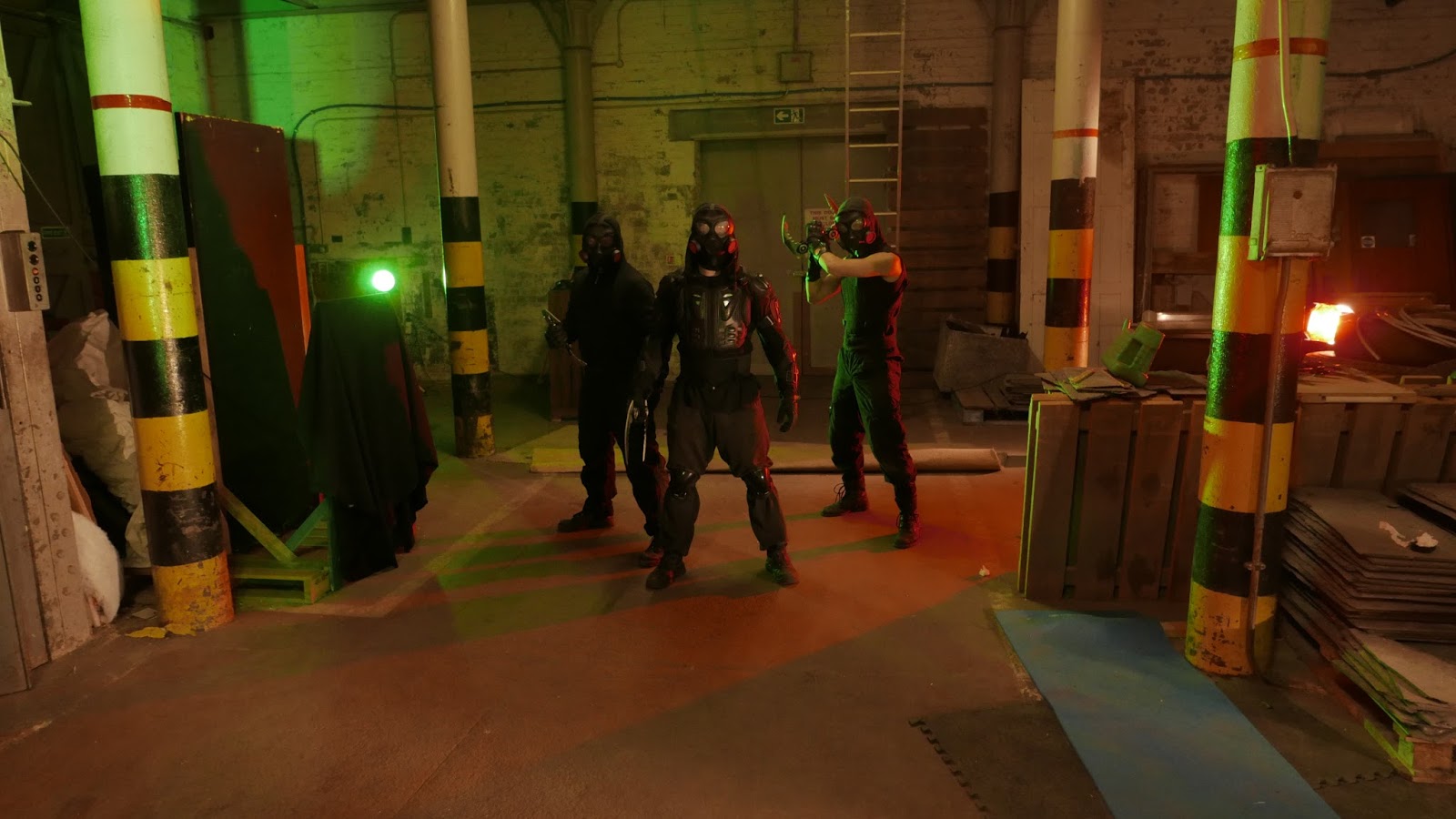
For Slasher House 2, we needed a government facility (or something that could pass for one). We actually live in the town that has the government facility that solved the Enigma Code (now a tourist attraction), but they were a flat out 'NO' out of the gate. We decided that we would have to found something that could work instead of and figured a 'Lazer Quest' could work. We emailed every Lazer Quest in a 100 miles radius and out of 25 we got a response from 2, we met with one. It didn't work out due to the times we needed, but we had the location should we want it. 

We eventually went in a different direction that worked out better for us, but I'll talk about that in a future blog. 


___________________________________________________________________

I should point out, that its important to be honest and up front here, telling them you're shooting a family drama when really you're shooting a gore soaked torture porn is counter productive when you turn up on the day and start spraying the place down with food colouring and syrup and if they think they've been fooled, chances of them signing a release form are slim and even if they do and then find out they've been lied to they'll just flat out refuse the next filmmaker that come knocking and its your job to make sure that we pave the way for everybody in the community.

Just like any aspect of filmmaking, employing creative thinking is your friend and if you think about what you need in front of the camera creatively you might even surprise yourself in what you come up with what you think of outside the box or sometimes its as simple as just asking. 

MJ

IF YOU FIND THIS BLOG USEFUL. PLEASE SHARE. You can keep up to date with our filming goings on at our FACEBOOK PAGE :)

 Get Legacy of Thorn on DVD and Digital HD now.
ADVERTISMENT


Monday, 4 April 2016

AUDIO APRIL : DIY Audio (Getting Audio Without A Sound Guy)


Slasher House (2010)
Now before we get started let me just say, when it comes recording sound on set, there is absolutely NO SUBSTITUTE FOR A REALLY GREAT PROFESSIONAL SOUND GUY!!.
Someone who really knows what they are doing and can capture professional quality sound is indispensable and if you can afford a professional sound guy then thats exactly, without a doubt, what you should do.

However, if you're making a film on buttons and glue, the chances are you can't afford to hire a really great sound person and so the temptation is is to get your mate 'bob' to do it because he kind of, sort of knows his shit about music or something. This is a big mistake. 

Filmmakers often overlook sound on their films and they really shouldn't, good sound is probably more important than a great picture, as you probably heard a billion times before, but its very true. 

My first couple of films, I had dedicated sound guys, I couldn't afford 'professionals', but these guys had just come out of college/university studying music or sound production and claimed they could do the job and when you're working with nothing and people are offering their 'expertise' for free the temptation is strong to take them up on that. The sound I got from these guys was bad, for different reasons each time, by the end of the 3rd feature I literally thought "Fuck, I could do this better myself". So that's what I decided to do.
Legacy of Thorn (2013)

A quick note : On Slasher House we sent our sound guy home about half way through and we're lucky enough to get the friend a cast member, who was working for the BBC as a sound recordist, to kindly donate his time to help us finish up. The second half of the film had much, MUCH better sound, which goes to prove my original point, there really is NO SUBSTITUTE for an professional sound guy. 


THINKING ABOUT AUDIO EQUALLY


The Mycho SuperBeast MK1 : With Audio set up
Remembering that audio is half your picture is a good start and if, like me, you can't afford a professional sound recordist then you need to start thinking about how you're going to get you're audio on set whilst you're filming. This comes down to a bit of practice and a fair amount of planning.

When I'm planning my shot lists, I now plan, from scene to scene where I'm going to get my audio from too. For me, making narrative film, the important stuff becomes dialogue. Almost everything else is going to be done again in sound design (or at least can be if its not right), but dialogue is something you're going to have a tougher time covering if you fuck it up.

So when shooting any scenes with dialogue my intention is to get my mic as close to the source as possible. My mic is mounted to my rig along with my external recorder, along with headphones for monitoring and at first I would run a cable for long shots and mid shot and have someone hold boom for me. This however started slowing me down a little with having to change out connections and reposition mics every time and was only remounting the mic to my rig for close ups. Then I noticed something in my edit. 


ADVERTISMENT

When I was matching audio, the wide shots, the mid shot and close up dialogue almost always matched up, or at least close enough, with the other shots. Of course the close up audio was always the best and clearest and so I was adding that every time and just adjusting levels for distance in post. So then I stopped getting my audio at the wide shot, but instead starting getting it on the mid shots and close ups. I even set up my rig so that the mic was closer to the actors (Using a magic arm) for better quality sound.


Hollower (2015) : MonoPod Boom-Pole
If you're doing a shot with just one or two lines, just make sure you jump in after an just grab a couple of clean decent takes of those lines too. The more you have to work with in the edit the better you're final piece will be and more importantly the easier it will be. On top if that, grab some general room tone, about 30 seconds will do it, just to fill in the gaps. I quiet often find that if I forget I can snatch it from pauses in the dialogue, but its not a great habit to get into.  

Its important to note, that after shooting a scene I also get 3 takes of just the audio from the actors standing them much closer to the mic, I find myself using this audio as much as possible as its obviously the best quality of the lot. I'll also have actors give me any noises that they'll make through out the scene. Fight noises, grunts, gasps and anything else we can think of, very similar to the way Robert Rodriguez recorded dialogue for El Mariachi.


MychoBeast MK2 : Added magic arm and iPhone Monitor
After that I'll often wander round set just recording sounds that will be useful in my sound design, some of these sounds you pick up fine whilst recording visuals, but its often a good idea just to wander around getting sounds that keep the sense of the space, like bangs, doors, interesting background and other things that would be hard to find in stock afterward. 

Now obviously this works well for narrative filmmaking, where your actors are reading and performing the same lines over and over, if they're good actors then they're timing and beats should be pretty close, if not exact, every time. I know one actor who is so good at this that they take any decision making out of my hands as every take is exactly the same, including timing and tone.

If you're shooting a more run and gun style, or shooting doc stuff, then you'll probably have to reconsider your set up. But for me this works great and is actually easier for me than spending hours syncing files up in post afterwards.

BUILDING MY AUDIO RIG

I originally built this rig for use with a Canon T3i and eventually my Panasonic G7, it works fine with both. In building an audio rig, you need FOUR hugely important components that will help you capture your sound on set. 

EXTERNAL RECORDER


If you're shooting on a DSLR or Mirrorless camera then the sound directly from your camera isn't going to be that good, this due to the poor pre amps that a featured in most models. If this is the case then you're going to want an external recorder to record your audio, like in the good old days of shooting on film. I use Zoom recorders as I find them the best value for money in terms of quality, but there are plenty of other options out there.

There are literally dozens of affordable recorders available for this type of things and they range from about £100 - £1000+ depending on the level of professionalism you're after. They offer solid digitally recorded sound and are a clear upgrade from using the sound that your camera records. You might be lucky enough to shoot on a camera that has a decent sound input and also allows you monitor your sound which is the is the most important aspect when recording. Most decent recorders also allow you to monitor levels via the LCD screen on the front, they'll help you know pif your sound is too quiet, too loud or when it peaks. 

I'll be looking at recorder options in another blog over the next few weeks.

MICROPHONE

To record decent sound you're going to need a decent microphone, something that records good quality audio. There literally hundreds of options out there and the prices can get pretty serious, pretty quickly, but for the low budget beginner there are still some great options out there. Most notably the Rideo VideoMic and the Rode VideoMic Pro, which are cheap, solid solutions to good on set audio. 

Its important that you make sure the microphone you get suits your needs and does what you need it to do. For me, I needed a boost to the sound input for quiet scenes and so I made sure the microphone that I chose allowed for that, but really the sound you get and how good it is comes down to how close you can get that microphone.

I'll be looking at Microphone options over the next few weeks.

HEADPHONES

After you have your recorder and microphone set up, you'll need to be able to monitor what it is you're recording. This is incredibly important if you're recording your own audio, because this is where you'll know if you need to do retake, or if your audio peaks and generally just getting what you need. 

I would suggest in purchasing a pair of large 'can' style headphones, they block out outside noise to give you a better overview of exactly what you are recording and the levels and quality of that recording. I've had to use in ear headphones in a pinch before and they are no where near as good. You can some usable headphones these days for as little £10-£15, although the more you spend the more durable they'll be and the longer they'll last, just don't forget to be monitoring your audio at all times. 

MOUNT


You'll need something to mount your microphone and recorder to, most cameras have a hot shoe adapter for mounting a microphone, but if you also have a recorder to mount then you'll need something to extend the amount of space you have to mount things to or you'll need to add a separate mount for your recorder. I found that for my eternal recorder a GoPro bike mount works great. 

If you want to get your microphone closer, you'll need  an extension cable for your microphone and something to mount it to. I found that I could get extra use out of my old MonoPod (which I picked up for £15 over 10 years ago) by adding a hot-shoe and mounting my mic to that for wide shots using it as an extendable Boom-pole. If you don't have a monopod, I've got away with using a £1 selfie stick before. 

I'll look at low budget mount options over the next few weeks. 


______________________________________________________________________

Like I said before, the best way to get great sound is 'hire' a really great sound guy, but I promise that doing it yourself is much better than relying on someone who doesn't know what they are doing. It will save you time, effort and major headaches when it comes to post for one and it will help you under stand the importance of audio when you can afford to hire someone. 

This is the first in my Audio April series, over the next month I'll be looking at how I record sound on set, what I use to do so and how I mix it afterward.

MJ

IF YOU FIND THIS BLOG USEFUL. PLEASE SHARE. You can keep up to date with our filming goings on at our FACEBOOK PAGE :)


 Get Legacy of Thorn on DVD and Digital HD now.
ADVERTISMENT