Showing posts with label no budget filmmaking. Show all posts

Thursday, 2 June 2016

INDIE INTERVIEWS : FILMMAKER/AUTHOR - JAMES PLUMB

Based in Cardiff, Wales, Filmmaker and recently debuted Author James Plumb is well known in the UK for directing brit remakes of classics 'Night of the Living Dead' and Slasher classic 'Silent Night, Bloody Night'. Plumb also debuted his first novella as part of the 'Year of the Zombie' book series with his new undead tale 'Little Monster'.

I caught up with James Plumb to talk about remaking classics, his latest film 'Kerb Krawlers' and the challenges of being a first time author. 

Every journey starts with an origin story, How did you know you wanted to make films?
Origin story, huh? Well, I was bitten by a radioactive video cassette on a school trip and the next day… Wait, wrong guy…

I guess I’ve always known. I was obsessed with film at a very early age when my parents were watching “Jaws” on TV while I was in my bouncer. Every time Bruce would eat a kid, I’d go mental clapping my hands and shouting “Big Fish, Big Fish!”

Later on during school holidays, when my mum was doing her studies at the library, I’d plonk myself down in front of film reference books which dissected films through its stills. So I was exposed to famous horror set pieces from “The Exorcist” and “A Nightmare on Elm Street” years before I got to see the films themselves.

In 1987 my dad brought home a JVC VHS homevideo camcorder from work and let me get my grubby little hands on it. I was seven years old and the thing was nearly as big as me. Straight away I was making these weird little Twilight Zone-esque shorts. Creepy little films about dopplegangers, ghosts and crazy cat ladies with skeleton babies… These gradually became more and more elaborate.

As a teen in the 90s, I was lucky enough that my local newsagent stocked Fangoria, Gorezone and Starburst cementing my genre fandom. I got a job at the local indie videoshop and devoured the horror section, moving onto sci-fi, action, basically any genre stuff.

After that I guess I didn’t have a choice.


How did you become involved in Night of The Living Dead : Resurrection and Silent Night, Deadly Night : Homecoming?
Both of those projects came from the producer Andrew Jones. He saw my short film/love letter to slasher films “Final Girl” back in 2011 and asked if I wanted to make a zombie feature. At first he didn’t tell me it was a remake of NOTLD, just a zombie film. I was initially hesitant as, although I’m a fan of a number of zombie films, from Romero to Fulci to O’Bannon to Kitamura, there’s been so many bad or unremarkable zombie films I didn’t want to add to that mountain, unless there was a hook, something to hold my interest. Then he revealed it was a remake of THE classic zombie film, I freaked out and started crafting a polite e-mail why I didn’t want to make a zombie film, let alone a remake…

Thank god I didn’t send that e-mail, because here was a guy offering to produce my first feature film! Anyway, I turned that polite e-mail into a manifesto of why I’d do the film under certain conditions. Andrew was very patient, and at our first meeting agreed to each and all of the points.

Andrew’s initial idea was to do a British spin on the original, which is such a classic tale that you can set it anywhere. So we didn’t try pretend we were shooting in the States or even London, we decided to make it Welsh through and through, to give the film it’s own accent. By setting it in the UK, we turned what could be seen as disadvantages into strengths, e.g. in the UK not everyone is packing heat. So it would be harder for our characters to dispatch the zombies, no double taps to the head. Developing that led us to the conclusion that if a family member got bitten, the characters would not necessarily jump to the conclusion that the logical course of action would be to kill their loved ones. If there was even the slightest chance that their relatives could get better, wouldn’t they take that risk? This led to locking undead relatives inside the house, creating a pressure cooker environment, which meant that inside the house is just as dangerous as out there.

While editing NOTLDR, Andrew approached me with SNBN. I loved working with the cast and crew, so the opportunity to reteam with my new extended family was an easy decision to make.


As we all now filmmaking can be tough, what were some of the downside of going out on your own?

I don’t have much frame of reference cos I’ve always been an indie guy. But juggling filmmaking, the day job and parenthood can be a little rough sometimes. But totally worth it.


On the flip side, what were the upsides of doing it by yourself?
Independence! And the control that comes with it.
That’s what I love about your Mychoverse, you have complete creative control over it. 


What were the differences for you between working on an established property like Night Of The Living Dead or Silent Night Bloody Night as opposed to working on a Brand New work like Kerb Crawlers?

There was a level of freedom with an original property like Kerb Crawlers, which I didn’t feel we had with the remakes. We could literally take the film in any direction, across any number of genres. With NOTLDR, we took the film in a number of direction within the zombie siege sub-genre, but it was still within that box. With SNBN, we chafed against the complex giallo-esque plot, so we ended up following the original more than I would have liked.

With Kerb Crawlers, we set up our protagonists in Act One, then flip the tables entirely in Act Two, by Act Three we’ve changed it up again.

When I saw From Dusk Til Dawn at the cinema, it had an immense effect on me. Starting as a hard-boiled crime film and then flipping to a vampire monster movie so suddenly, showed me how a film could manipulate and subvert an audience’s expectations.

Basically, I love mindfucking the audience.


If there was one piece of advice you could give to filmmakers, apart from 'just make movies' what would it be?

Just make movies.

No?

Learn basic storytelling.

The ability to convey information through mise-en-scene.

Show don’t tell.

Horror is one of the purest forms of cinema, the intention is to make the audience feel something: fear. It’s all well and good having beautifully composed shots but if they don’t convey meaning, then you have to rely on the characters spouting exposition, and in a horror film that will grind your film to a halt.

The angle of a shot, and the way you cut to another shot: 100% affects the meaning of your film. Learn the grammar of cinematography.


And finally, what is next for James Plumb?

Middle of last year, I decided to put the filming on the back-burner due to health reasons within my family. It was a hard decision, but the right one for me at the time. The day after I made the decision, Wayne Simmons (author, horror convention organiser and lovely humanoid) dropped me a message to ask if I’d like to take part in a zombie novella event as part of David Moody’s (author, bald and also lovely humanoid) Infected Books label. I was speechless.

When I did regain my speech, I told him I was honoured but could I have twenty-four hours to think about it. I’d just decided to put my family first and although I’d written a number of scripts over the past few years, it had been awhile since I had written prose, let alone a novella.

But I was intrigued. It was a challenge; could I write a novella? And I had an idea, originally it was a film idea, one that I had plotted out, and written about 40 pages of script for. But there were elements of the idea, which appeared to work better as prose.

So I bit the bullet and agreed.

Aaaaand it was a challenge. A fun/rewarding/terrifying/frustrating challenge.

Funny thing about the feedback from early proofs of LM, everyone said it’d make a great film. So I may dust off that script and finish it…

The book is “Little Monster”, it’s out on Amazon Kindle from 1 June 2016 as part of the Year of the Zombie event. Blurb below:

Your six-year-old daughter has been bitten by a zombie and now hungers for human flesh.

What do you do?

Do you double tap her in the brain?

Or do you become the ultimate enabler and feed her human flesh?

And where do you get human flesh from?

This is the dilemma that Gareth and Jen face with their beautiful daughter Ana.

What will they do?

And how far will it go?

You can pick up a copy of 'Little Monster' now at HERE

MJ

IF YOU FIND THIS BLOG USEFUL. PLEASE SHARE. You can keep up to date with our filming goings on at our FACEBOOK PAGE :)
ADVERTISMENT

ADVERTISMENT

Thursday, 26 May 2016

INDIE INTERVIEWS - FILMMAKER KURT DIRT


Kurt Dirt is a musician, filmmaker and self proclaimed Duke of Puke, a well known artist in the UK indie Underground scene having contributed to movies like Troma's 'Return To Nuke Em High' and a string of other Indie concoctions as well as recently debuting his own latest gore soaked masterpiece in the form of the shot on Hi8 'Life is Cheap'.

I recently caught up with Kurt to discuss low budget filmmaking, old skool formats and what inspires him to make movies.

Every journey starts with an origin story, How did you know you wanted to make films?

I was a pretty sickly kid so I'd be asleep most of the day and awake all night, therefore I got hooked on late night ITV and channel 4 horror / weird movie marathons. I'd come in to school the next day and excite & horrify my classmates by telling them about what i'd seen. Of course sleep deprivation, fever and calpol always made my memory of the plot lines a little more trippy! I loved seeing the fear / disgust on their faces and I get the exact same buzz when I screen my movies today!

With more and more people choosing to just go out and shoot their own movies now, what made you take the DIY approach to making movies?

For me it's about maintaining control and the fun, I do this for my own enjoyment and to entertain fellow weirdo's. I have ideas for a hundred movies and I don't think I could ever pitch one of them to a studio / production company without being sectioned or put on some kind of register. I also like the way DIY movies look, to me they feel more dangerous. My main inspirations for 'Life is Cheap' were Troma,Yorkshire low budget film makers Smile Orange and the early films of Alex Chandon such as Bad Karma


As we all know DIY filmmaking can be tough, what were some of the downside of going out on your own?

Money is an obvious one, we were really lucky to have some generous donations via kickstarter (triple figures is mega bucks to us!) but there were costs for things such as travel expenses for actors etc that stacked up pretty quickly, also getting people all in one place can be a knightmare, it certainly pays to sit down, work out where and when you need everybody and plan it properly. 


On the flip side, what were the upsides?

As previously mentioned there's the freedom, we weren't bound to any set in stone script or screenplay so we could kind of riff on what worked on camera and what didn't work. All of our cast were fantastic but Ben & Louise in particular really shone when it came to improvisation and building on their grotesque characters. As a director I think it's important to stick to your vision for the project but it really does pay to listen to your cast and crew and allow people to think outside the box and come up with their own ideas, shoot everything and see what works and doesn't work when it comes to editing. My main indicators for what was going to stay in the movie was if I was struggling not to laugh behind the camera or if I was squirming to the point of thinking "what am I doing with my life?" 

Another great thing is getting to see the enthusiasm people put in to the project, especially the actors / crew working for little or no money, a good atmosphere on set / a buzz around the project as a whole can be really infectious. 


You recently produced 'Life is Cheap', which you shot on Hi8, what were the challenges of working on an old skool format?

Really not as many as you may think. What I love about working with Hi8 is that everything instantly looks kind of grubby and a little worn, you get all these cool little glitches and dirt without having to spend time and money on plug in's. The only real restrictions we faced were when it came to digitizing the footage. I work on a Mac and for some reason the majority of digitisation devices only come with PC software so we had to hunt around for a compatible programe online. The other is sound. Even if your going for the whole grunge / video nasty asthetic it's always worth still recording everything with a boom / sound recorder. I really regret not doing so on 'life is cheap', fixing audio issues in post was a nightmare and left us with lots of great scenes which were unusable due to actors lines being muffled or distorted.


Apart from 'Just make movies' what advice would you give people starting out making their own films?

Be yourself. Don't feel like you have to make films based on what you think other people want to see. Take time to sit down and work out what kind of aesthetic you want, what you want your audience to feel and do your research. Reading books by people I admire like Lloyd Kaufman, William Castle and John Waters and then making notes was a great help. Network and find other people who share your excitement and get them on board. Helping out on others projects can also be a great learning experience, for me working in various capacities on Lloyd Kauffman's 'Return to Nuke Em High', Liam Regan's 'Banjo' and Heidi Moore's 'Dolly Deadly' taught me much more than any film school could. 

And finally, what is next for Kurt Dirt?

Me and Ben (joeby cleftico in life is cheap) have been making plans for our next project, a gory buddy road movie with Jimmy Savilles ghost and Peter Sutcliffe. Ben has written some songs for it already and they're hilarious, definitely secured our place in hell. Also I'd like to take a break from comedy/ exploitation make a really scary, gruelling Horror movie, something that will make people feel like I did when I was a little kid cringing infront of the TV watching Evil Dead or the Texas Chain Saw Massacre, too afraid to get up and stop the VCR. I've been working a 'day job' at pasaje del terror in Blackpool and as well as being fun it's great research in to what not only makes people jump but scares them on a deeper psychological level.

You can pick up 'Life is Cheap' now at https://videorgasm.bandcamp.com
_______________________________________________________________________

MJ

IF YOU FIND THIS BLOG USEFUL. PLEASE SHARE. You can keep up to date with our filming goings on at our FACEBOOK PAGE :)

ADVERTISMENT

Tuesday, 24 May 2016

NIGHT SHOOTING : FILMING ON LOCATION AT NIGHT

Shooting at night s probably one of the toughest things you can attempt as a low budget filmmaker, this is because, no matter what you are shooting on, your camera needs a good amount of light to capture a good quality image. Shooting at night reduces your light sources drastically if you are shooting in urban areas and if you are shooting in the woods, the middle of country side or even somewhere that isn't usually accessed after dark it becomes even trickier business to get that light onto your cameras sensor.

One work around is to shoot 'Day for Night', which involves shooting the scene in sunlight (works best shooting on  cloudy/overcast day) and then grading in post to make the image look a little like twilight. I tried this early on when I started making films and really hated the results, I've always found it better to shoot in darkness and bring in whatever light I can. The result is always a far better image.

Having a budget usually solves this problem by hiring huge spotlights and generators to help make up for the lack of good light, but this is expensive and something that is usually saved for large budget productions. If you, like us, are usually make stuff on spit and buttons, then you'll need to come up with more creative solutions to work around your lack of light.

Here are 3 tips to help you get the most out of shooting at night and how to take that into account when you are looking for your location.

1. PICK YOUR LOCATION WISELY

The easiest way you can start to combat shooting at night is by picking your location wisely. A few years ago, when we were working on preproduction for Creepsville, I would wonder around at night looking for the best lit streets, alleys, carparks, you name it and once there I would look at how much light is already there from street lamps, security lights. Then I would look at what other extraneous light sources there were like shops signs, obviously the more light the better. This means less light I have to bring along with me, which in turns means less disturbing people and less drawing attention to yourself.

Legacy of Thorn (2014)
On Legacy of Thorn, when it came time to shoot the infamous 'bridge scene', I spent months looking for a bridge that we could shoot on without being disturbed that would also give us enough light to cover the action. The first one we tried, we scoped during the day, took note that it had street lights above it and figured it would give us enough light. On returning in the evening, not only did we find that most of the street lights were broken, but it was also a well known hangout for crackheads who made themselves a problem very quickly.

We eventually found something closer to home that fit perfectly and although it had some street lighting, we still had to make up the difference with our own portable flood lights.

 Get Legacy of Thorn on DVD and Digital HD now.
ADVERTISMENT

2. PORTABLE LED LIGHTS

Chances are, if you are out shooting in the woods, on the street or in an abandoned factory at night, you're not going to have access to power. This always something I try to avoid, simply to make life easier for us and give us more freedom in lighting. However, if its not possible, we bring out the portable, rechargeable LED'S. These are bright flood lights that charge on the mains and give around 3 Hours + of continuous use and weigh next to nothing. They are fairly harsh, but used correctly (with gels or diffusion) are a great way to light dim sets when there is no good natural light. They cost around £45 each when I bought them in 2013, there are now better cheaper options out there too.


Cleaver : Rise of The Killer Clown (2015)
On shooting Cleaver : Rise of The Killer Clown, we were shooting a scene in a car, in the middle of the night, in a residential area. The last thing we wanted to do was pull a generator out there, or we certainly want to run cables across the road. The street lamps gave us some coverage, but nowhere near enough once our actress was in the vehicle. In stead we matched the street light colour on LED's with gels and just used whoever was free as light stands. It matched the natural light, but it gave us the extra light we needed to make the scene more visible.

Cleaver : Rise of The Killer Clown (2015)
These lights are great in place of having to drag a noisy generator down and even then it takes an expensive generator to run even our low wattage work lights, never mind our red heads or spotlights. Using these also means that should we need to, we can use a smaller generator to run other low power things like charging stations and smoke machines.

P.S. Before I could afford my own portable LED'S I made some for about £5/$7 each, find out how HERE.

3. FAST LENSES

One the best weapons to combat low light situations is using a fast lens on your camera. This is something that wasn't even really a choice when I started out filmmaking, if your camera's fixed lens sucked in low light (which they all did) then that was that. Now even the most inexpensive DSLR'S can capture great low light images with the right lens attached,  If you're shooting on an interchange lens system camera, you should try and have at least one fast lens that opens to at least f/1.8. This will help you get more light into your camera and make picking up a usable image just that little bit easier. Its best not rely on this, but it can give you that extra boost once you've done the above. There are also cameras like the Sony A7S/A7S2/A6300 that can shoot in incredibly low light with out damaging your image, but I still advise taking location and lighting into account even with miracle cameras like that available.

When shooting the infamous 'Bridge Scene' on Legacy of Thorn, even with choosing the best location for light and having the portables there, I still ended up shooting almost every shot on my Canon 50mm f/1.8 to get a better image. The downside of this is that the depth of the image was very shallow, but the upside was that I got a better image and because we were shooting in a wide open space it meant that the close focal length didn't impact what I wanted to get too much.

These days if we're shooting outdoors I try to plan my shots around the widest opening lenses that I have. Its not always possible, but its worth thinking about.

_____________________________________________________________

MJ

IF YOU FIND THIS BLOG USEFUL. PLEASE SHARE. You can keep up to date with our filming goings on at our FACEBOOK PAGE :)

ADVERTISMENT


Thursday, 19 May 2016

INDIE INTERVIEWS : WRITER/FILMMAKER PAT HIGGINS

Pat Higgins is somewhat of a legend in the UK's low budget indie scene. Since the release of Trash House in 2005 the Essex based filmmaker has gone on to produce a slew of internationally released horror titles such as Killer Killer, Hellbride, The Devils Music, as well as being one third of the creative force behind the 'Death Tales Anthology' series. As if he wasn't busy enough Pat also takes his time to run filmmaking and screenwriting masterclasses for the next generation of filmmakers.

We recently caught up with Pat to discuss his filmmaking career, his inspirations, the state of the UK indie market and his current and constantly evolving film project 'House on the WitchPit'.

Every journey starts with an origin story, How did you know you wanted to make films?
There were a couple of films that had a huge influence on me as a kid. I saw Star Wars on opening night as a three year-old, which was probably a considerable factor, but the other ones that left me thinking "this is what I want to do" were a rerelease of Disney's 20,000 Leagues Under the Sea, (which I sat through fidgeting waiting for the squid fight, but when the squid fight turned up it basically rewired my brain) and Flash Gordon. 
So the seeds of cinema were sewn early. The final piece of the puzzle fell into place with Gremlins turned up in 1984. I was too young to see it thanks to the 15 certificate, so I spent almost a year obsessing over every piece of merchandise and counting down the days until the rental release. That year kind of shifted my outlook to comedy-horror, before The Shining and a grainy tenth-generation pirate copy of The Exorcist shifted my brain and my outlook yet again a few years later.

What made you take the DIY approach to making your own movies?
Once I got out of Uni, I spent a while trying to shift a spec script that I'd written with a friend of mine. As a gradually realised that selling that script was very, VERY unlikely to happen, I began to focus on the idea of shooting something myself just to kick my career off. I set up my limited company in 2003 for a completely different reason; Jinx was originally intended to sell individual stand-up comedy clips to mobile phones (at a point when video on phones was somewhere between bleeding-edge technology and outright science fiction). Remember, this was before things like YouTube even existed. The window for that business opportunity lasted about a second a half. One minute, it was impossible, the next minute it was commonplace. So I was left with a media company with no real purpose, and a burning desire to make a film. So we took some money that we were intending to buy a car with, and make TrashHouse instead.

As we all now filmmaking can be tough, what were some of the downside of going out on your own?
I'm pretty sure I only ended up getting attention because we did what we did at a point when it was stupidly tough to make a movie. According to MJ Simpson, there were about 14 British horrors made in the year we made TrashHouse, whereas last year there were around 250. There were no options in terms of VOD, of course, so we were reliant on old-school distributors and getting our flicks out into bricks and mortar shops like Blockbuster. We managed to overcome so many hurdles to get the early films out there. The hurdle we never overcame was how to get the money to trickle back down to us once it had gone through the hands of multiple distributors. As a result, our first three films lost a considerable chunk (or, indeed, all) of their investment, despite coming out on DVD or limited cinema releases all over the world. Keeping going in the face of those kinds of issues is very, very tough. 
Here's an example. Just last week we re-released our awesome horror romantic comedy Hellbride on VOD (which your wonderful readers can pick up extremely cheaply from http://www.jinxmedia.co.uk - go and do it. It's funny and it's scary and people like it). Now, that movie's been out for the best part of a decade. Out on DVD in the UK, in the US. Various streaming platforms worldwide. Our best estimate is that just over a third of a million people have seen that movie. 
The money from the fine people who purchased the High Definition VOD version last week will be the very first payments that Jinx has ever seen for that film. We shot it in 2006. 


On the flip side, what were the upsides of doing it by yourself?
Well, let's stick with Hellbride as an example. It's a genuinely sweet romantic comedy that just happens to have some fairly horrific bits of business (mouths getting stitched shut, brides hacking at one another with axes) and the odd genuinely filthy joke. If that movie had been made within the system, there would have been two options. You could have lost the gore and the dick jokes and made the thing a PG-13 date movie, or you could have lost the sweet, genuine romantic comedy and made it a full-tilt horror for the Saw crowd. Odd little movies that do their own thing aren't welcome within the system. The majors are massively risk averse in terms of the 'products' they make, and as cinema prices rocket the audience have become extremely risk-averse too, and I really don't blame them. if it's going to cost you north of £50 to go to the cinema once you've thrown in parking and popcorn, you want to make goddamn sure that the movie you watch is going to fulfil your expectations for your evening out. So the wonderful freedom allowed by doing things as a tiny indie is something you just won't find anywhere else.


You recently shot House on The Witch Pit, a completely different approach to filmmaking, what was the idea behind creating the never 'finished' film.
I wrote the first draft of something that was then just called 'Witchpit' in about 2002, and over the years the script has been through countless reimaginings with only the title remaining the same. Eventually, I came to embrace this. I loved the idea of a movie becoming almost an urban legend in itself. Where people who both thought they'd 'seen' it would come to discover that the versions they'd seen were so fundamentally different that they were effectively different movies. This approach also sidestepped the whole piracy thing that dogged the early stages of my career. I'm extremely excited about some of the versions that will be appearing towards the end of the year. It's not going to carry on forever, though. The experiment, for better or worse, ends on January 23rd 2020, four years after the premiere. I talked about some of these ideas over at http://www.huffingtonpost.co.uk/pat-higgins/why-you-cant-watch-my-new-horror-movie_b_8707724.html for those that are interested.
 

If there was one piece of advice you could give to filmmakers, apart from 'just make movies' what would it be?
Be genuinely lovely to everyone you work with. Treat them like family members. If they let you down, try to understand why and continue to treat them nicely (although you may, of course, wish to avoid placing yourself in that position again). Feed people. Be honest with people. Never force them into a corner or mislead them.
Not everyone you meet will follow these same ideals. The industry has a few unpleasant sharks in the water, and you may well run into some of them. Don't become one of them, no matter what happens. Make sure that every night, when your head hits the pillow, you can sleep the sleep of the righteous and the just. That's more important than anything else. The things you put out there are the things that will come back to you.
Make sure your conscience is clear. If it's not, do something about it.


And finally, what is next for Pat Higgins?
The Witchpit experiment continues for another three and a half years, obviously. I've also got an absolutely KILLER script called Your Lying Eyes (which is probably the best thing I've ever written) which we'll hopefully be selling to a third party rather than making ourselves. There might very possibly be a sequel on the horizon that we aren't allowed to talk about yet. We keep busy, keep trying new stuff, keep breaking new ground. At the end of the day, there will be loads and loads of time to sleep when they shovel dirt over your head. Nobody's death bed wish was ever that they spent their life making less cool stuff.

You can find Pats work and more at  http://jinxmedia.co.uk

IF YOU FIND THIS BLOG USEFUL. PLEASE SHARE. You can keep up to date with our filming goings on at our FACEBOOK PAGE :)


 Get Legacy of Thorn on DVD and Digital HD now.
ADVERTISMENT

Tuesday, 10 May 2016

FINDING LOCATIONS : 3 Easy Ways to Find Your Next Film Set


As we've talked about before, finding the right location can make or break your movie. Shooting your film in the right place adds so much production in terms of style, look and value that to over look it is setting yourself off on the wrong foot.

In big budget movies, it not uncommon for sets to be built on a sound stage wherever possible, this is usually due to the amount of control the creative team needs over the set, i.e being able to remove walls, lighting, shooting around the clock. If you're shooting on a budget its unlikely (although not impossible) that you can build your 'Church Interior' or 'Canadian wilderness' from scratch as a set on a sound stage. This usually means that you have to find something the preexists in the world.

This is both a blessing and a curse. Finding a pre-existing location means that you have less control over things like weather, power, access, angles, food establishments and the list varies drastically from place to place, meaning a lot of prep and compromise most of the time. The upside however, is that you get something real, something that you can't build, something raw and lived in and that is really what adds the value to your films.

FINDING YOUR LOCATION

Following are 3 ways of sourcing locations when you are working on a limited budget, These 'suggestions' are by no means the best , or the only, ways of finding the right location for your film, but hopefully they'll help you think creatively about what you need and help you look at where you shoot in more productive way.

1. UNIQUE CIRCUMSTANCES

Douglas Prison : Isle of Man
Finding locations can be tough going. Especially if you need anything outside of student flat or family home, things start getting difficult pretty quickly. This is when you need to employ some of your unique circumstances to finding what you need. By 'Unique Circumstances' I mean this, Everyone has access to something unique that no body else has access to, in terms of locations.

This is basically looking at what you have access to personally. Can you make a film out that creepy looking shack your dad built at the bottom on the garden? Does your Aunt work at a High School after hours? Does your mate have the keys to the warehouse on a weekend? All these are great starting points to finding a great location to shoot in that isn't 'Mark's Studio Apartment' and also a brilliant way of getting the creative juices flowing. There a few things than coming up with a  scene or even an entire film based around an amazing location. 

I always 'try' to write locations based on something I know we have or can get access too, even if that means taking a pause from writing for a moment and throwing it out there to people I know with a "Does anyone have access to..." and usually I receive a "No, But I have access to...", sometimes this will dictate where the film is set and sometimes the direction a film will go.  You have to be creative and compromise when it comes to low budget filmmaking. 

Slasher House (2012) Douglas Prison : Isle of Man 

For Example, I originally wrote Slasher House to take place in an old run down mansion, when we were offered an abandoned prison, it was too good to pass up and we adapted and it worked out for the better, both visually and thematically. It also meant we had to adapt one scene to be set in a 'Gallows' which was a pretty awesome, if not terrifying, experience and also added another dimension to the film.

ADVERTISMENT
2. YOUR NETWORK

After you've spent your first couple of movies exhausting and exhausted your family and friends locations, you should have begun to develop a 'network' of people to work with, to show your work to and who also make movies. This is your community and these are the people you can turn to for help. 

Other filmmakers are a great conduit for resources, this is because, just like you, they spend their time making movies and, believe or not, have come up against most the same problems you have when it comes to getting locations and come out the other side. Its a great way to to find creative solutions to problems, by talking to people who have already solved those problems and getting their advice.

The biggest advantage of this, is that it gives you a new perspective and helps you think outside the box. One of the biggest mistakes I see people making in terms of locations is that they need something so they look for "INSERT LOCATION HERE" and that alone, when one of the key ways to solve the problem is finding something that can do the same job, but provides earlier access. Other filmmakers will have been through this and will be able to help advise you and what can substitute your needed set. 

Legacy of Thorn (2014) : High School Oldham : Main Building
Legacy of Thorn (2014) : High School Oldham : DT BLOCK
What I mean is, for example, on Legacy of Thorn we needed a hospital, but getting one that looked operational was tougher than we could have imagined. Instead we found a section of our old college that looked very similar to a hospital corridor (along with first aid room) and dressed it up to stand in for it. Throwing in some posters, a couple of extras in long white coats and nurses uniforms and we had a what we wanted but without the red tape of shooting a real hospital. 

Sometimes its worth talking to other filmmakers about how they made it appear that they shot in a location.

3.  JUST ASK

Possibly the simplest approach to finding the right location is to find the location you are after and just ask. It seems like there might be more to it, but its really as easy as that. Sometimes if we need a specific location we just find the place we want and then ask. Sometimes we're successful and sometimes not, but no one has ever done anything worse than say 'No'. Usually people just want you to cover electric or a small charge to use it, sometimes they might even just let you have it for free as long as it doesn't conflict with business hours etc.

The real issue with this approach is that it can become a numbers game and thats a lot of ground work, but if you're willing to put that work in, you'll almost certainly find the location that you're after. Just find the type of location you're looking for and make a list of suitable candidates, from here your kind of politely cold calling and explaining your project and what you want to do. Some people won't care, some will be interested, but won't be able to help you and you'll come across those who will do whatever they can to accommodate what you're doing. Its pretty much that simple.

Slasher House 2 (2016) Warehouse 
Slasher House 2 (2016) : Warehouse
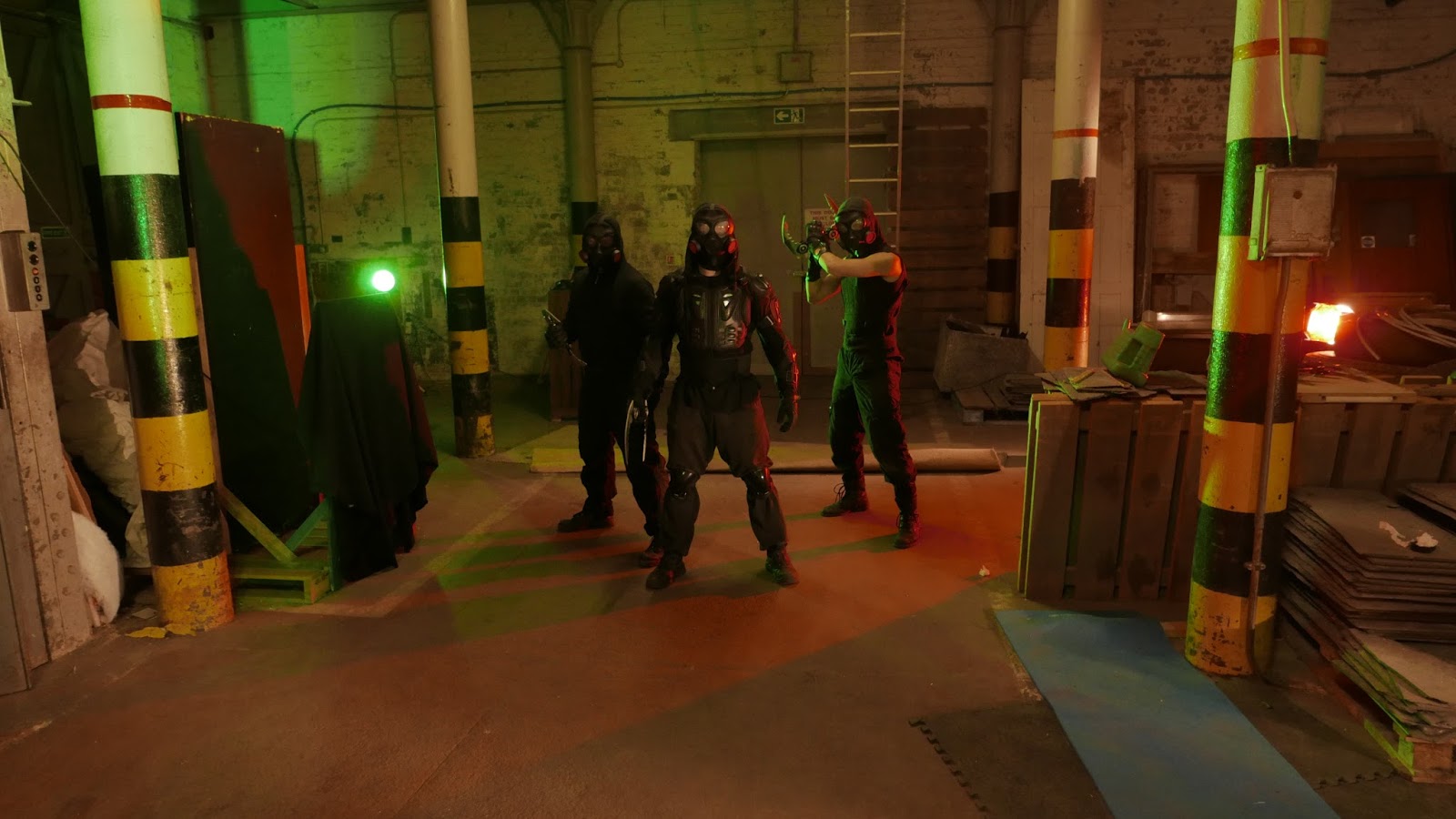
For Slasher House 2, we needed a government facility (or something that could pass for one). We actually live in the town that has the government facility that solved the Enigma Code (now a tourist attraction), but they were a flat out 'NO' out of the gate. We decided that we would have to found something that could work instead of and figured a 'Lazer Quest' could work. We emailed every Lazer Quest in a 100 miles radius and out of 25 we got a response from 2, we met with one. It didn't work out due to the times we needed, but we had the location should we want it. 

We eventually went in a different direction that worked out better for us, but I'll talk about that in a future blog. 


___________________________________________________________________

I should point out, that its important to be honest and up front here, telling them you're shooting a family drama when really you're shooting a gore soaked torture porn is counter productive when you turn up on the day and start spraying the place down with food colouring and syrup and if they think they've been fooled, chances of them signing a release form are slim and even if they do and then find out they've been lied to they'll just flat out refuse the next filmmaker that come knocking and its your job to make sure that we pave the way for everybody in the community.

Just like any aspect of filmmaking, employing creative thinking is your friend and if you think about what you need in front of the camera creatively you might even surprise yourself in what you come up with what you think of outside the box or sometimes its as simple as just asking. 

MJ

IF YOU FIND THIS BLOG USEFUL. PLEASE SHARE. You can keep up to date with our filming goings on at our FACEBOOK PAGE :)

 Get Legacy of Thorn on DVD and Digital HD now.
ADVERTISMENT


Monday, 4 April 2016

AUDIO APRIL : DIY Audio (Getting Audio Without A Sound Guy)


Slasher House (2010)
Now before we get started let me just say, when it comes recording sound on set, there is absolutely NO SUBSTITUTE FOR A REALLY GREAT PROFESSIONAL SOUND GUY!!.
Someone who really knows what they are doing and can capture professional quality sound is indispensable and if you can afford a professional sound guy then thats exactly, without a doubt, what you should do.

However, if you're making a film on buttons and glue, the chances are you can't afford to hire a really great sound person and so the temptation is is to get your mate 'bob' to do it because he kind of, sort of knows his shit about music or something. This is a big mistake. 

Filmmakers often overlook sound on their films and they really shouldn't, good sound is probably more important than a great picture, as you probably heard a billion times before, but its very true. 

My first couple of films, I had dedicated sound guys, I couldn't afford 'professionals', but these guys had just come out of college/university studying music or sound production and claimed they could do the job and when you're working with nothing and people are offering their 'expertise' for free the temptation is strong to take them up on that. The sound I got from these guys was bad, for different reasons each time, by the end of the 3rd feature I literally thought "Fuck, I could do this better myself". So that's what I decided to do.
Legacy of Thorn (2013)

A quick note : On Slasher House we sent our sound guy home about half way through and we're lucky enough to get the friend a cast member, who was working for the BBC as a sound recordist, to kindly donate his time to help us finish up. The second half of the film had much, MUCH better sound, which goes to prove my original point, there really is NO SUBSTITUTE for an professional sound guy. 


THINKING ABOUT AUDIO EQUALLY


The Mycho SuperBeast MK1 : With Audio set up
Remembering that audio is half your picture is a good start and if, like me, you can't afford a professional sound recordist then you need to start thinking about how you're going to get you're audio on set whilst you're filming. This comes down to a bit of practice and a fair amount of planning.

When I'm planning my shot lists, I now plan, from scene to scene where I'm going to get my audio from too. For me, making narrative film, the important stuff becomes dialogue. Almost everything else is going to be done again in sound design (or at least can be if its not right), but dialogue is something you're going to have a tougher time covering if you fuck it up.

So when shooting any scenes with dialogue my intention is to get my mic as close to the source as possible. My mic is mounted to my rig along with my external recorder, along with headphones for monitoring and at first I would run a cable for long shots and mid shot and have someone hold boom for me. This however started slowing me down a little with having to change out connections and reposition mics every time and was only remounting the mic to my rig for close ups. Then I noticed something in my edit. 


ADVERTISMENT

When I was matching audio, the wide shots, the mid shot and close up dialogue almost always matched up, or at least close enough, with the other shots. Of course the close up audio was always the best and clearest and so I was adding that every time and just adjusting levels for distance in post. So then I stopped getting my audio at the wide shot, but instead starting getting it on the mid shots and close ups. I even set up my rig so that the mic was closer to the actors (Using a magic arm) for better quality sound.


Hollower (2015) : MonoPod Boom-Pole
If you're doing a shot with just one or two lines, just make sure you jump in after an just grab a couple of clean decent takes of those lines too. The more you have to work with in the edit the better you're final piece will be and more importantly the easier it will be. On top if that, grab some general room tone, about 30 seconds will do it, just to fill in the gaps. I quiet often find that if I forget I can snatch it from pauses in the dialogue, but its not a great habit to get into.  

Its important to note, that after shooting a scene I also get 3 takes of just the audio from the actors standing them much closer to the mic, I find myself using this audio as much as possible as its obviously the best quality of the lot. I'll also have actors give me any noises that they'll make through out the scene. Fight noises, grunts, gasps and anything else we can think of, very similar to the way Robert Rodriguez recorded dialogue for El Mariachi.


MychoBeast MK2 : Added magic arm and iPhone Monitor
After that I'll often wander round set just recording sounds that will be useful in my sound design, some of these sounds you pick up fine whilst recording visuals, but its often a good idea just to wander around getting sounds that keep the sense of the space, like bangs, doors, interesting background and other things that would be hard to find in stock afterward. 

Now obviously this works well for narrative filmmaking, where your actors are reading and performing the same lines over and over, if they're good actors then they're timing and beats should be pretty close, if not exact, every time. I know one actor who is so good at this that they take any decision making out of my hands as every take is exactly the same, including timing and tone.

If you're shooting a more run and gun style, or shooting doc stuff, then you'll probably have to reconsider your set up. But for me this works great and is actually easier for me than spending hours syncing files up in post afterwards.

BUILDING MY AUDIO RIG

I originally built this rig for use with a Canon T3i and eventually my Panasonic G7, it works fine with both. In building an audio rig, you need FOUR hugely important components that will help you capture your sound on set. 

EXTERNAL RECORDER


If you're shooting on a DSLR or Mirrorless camera then the sound directly from your camera isn't going to be that good, this due to the poor pre amps that a featured in most models. If this is the case then you're going to want an external recorder to record your audio, like in the good old days of shooting on film. I use Zoom recorders as I find them the best value for money in terms of quality, but there are plenty of other options out there.

There are literally dozens of affordable recorders available for this type of things and they range from about £100 - £1000+ depending on the level of professionalism you're after. They offer solid digitally recorded sound and are a clear upgrade from using the sound that your camera records. You might be lucky enough to shoot on a camera that has a decent sound input and also allows you monitor your sound which is the is the most important aspect when recording. Most decent recorders also allow you to monitor levels via the LCD screen on the front, they'll help you know pif your sound is too quiet, too loud or when it peaks. 

I'll be looking at recorder options in another blog over the next few weeks.

MICROPHONE

To record decent sound you're going to need a decent microphone, something that records good quality audio. There literally hundreds of options out there and the prices can get pretty serious, pretty quickly, but for the low budget beginner there are still some great options out there. Most notably the Rideo VideoMic and the Rode VideoMic Pro, which are cheap, solid solutions to good on set audio. 

Its important that you make sure the microphone you get suits your needs and does what you need it to do. For me, I needed a boost to the sound input for quiet scenes and so I made sure the microphone that I chose allowed for that, but really the sound you get and how good it is comes down to how close you can get that microphone.

I'll be looking at Microphone options over the next few weeks.

HEADPHONES

After you have your recorder and microphone set up, you'll need to be able to monitor what it is you're recording. This is incredibly important if you're recording your own audio, because this is where you'll know if you need to do retake, or if your audio peaks and generally just getting what you need. 

I would suggest in purchasing a pair of large 'can' style headphones, they block out outside noise to give you a better overview of exactly what you are recording and the levels and quality of that recording. I've had to use in ear headphones in a pinch before and they are no where near as good. You can some usable headphones these days for as little £10-£15, although the more you spend the more durable they'll be and the longer they'll last, just don't forget to be monitoring your audio at all times. 

MOUNT


You'll need something to mount your microphone and recorder to, most cameras have a hot shoe adapter for mounting a microphone, but if you also have a recorder to mount then you'll need something to extend the amount of space you have to mount things to or you'll need to add a separate mount for your recorder. I found that for my eternal recorder a GoPro bike mount works great. 

If you want to get your microphone closer, you'll need  an extension cable for your microphone and something to mount it to. I found that I could get extra use out of my old MonoPod (which I picked up for £15 over 10 years ago) by adding a hot-shoe and mounting my mic to that for wide shots using it as an extendable Boom-pole. If you don't have a monopod, I've got away with using a £1 selfie stick before. 

I'll look at low budget mount options over the next few weeks. 


______________________________________________________________________

Like I said before, the best way to get great sound is 'hire' a really great sound guy, but I promise that doing it yourself is much better than relying on someone who doesn't know what they are doing. It will save you time, effort and major headaches when it comes to post for one and it will help you under stand the importance of audio when you can afford to hire someone. 

This is the first in my Audio April series, over the next month I'll be looking at how I record sound on set, what I use to do so and how I mix it afterward.

MJ

IF YOU FIND THIS BLOG USEFUL. PLEASE SHARE. You can keep up to date with our filming goings on at our FACEBOOK PAGE :)


 Get Legacy of Thorn on DVD and Digital HD now.
ADVERTISMENT